

A content lead I know told me her team was running Surfer and Clearscope side by side, paying for both, doing the exact same job twice. Nobody had actually sat down and mapped what each tool was supposed to be responsible for.
That's the mess I see constantly when I look at how teams pick AI content tools. They shop by hype instead of by actual workflow gap. I went through fourteen tools properly, what each one really does, what it costs, and who should honestly skip it, so you don't end up paying for the same job twice either.
What "AI Tools for Content Strategy" Actually Covers
Here's the thing nobody tells you upfront. There's no single category here. Content strategy spans topic research, keyword clustering, content briefs, drafting, on-page optimization, editorial calendar management, and post-publish performance tracking, and no single tool does all of that well, no matter what the landing page claims.
I think that's the first mistake most teams make. They treat this as one shopping decision. The right move is mapping your actual workflow gaps first, then filling each one with the tool built specifically for that job.
Quick Comparison Table
Tool | Core Function | Starting Price |
|---|---|---|
Surfer SEO | Content optimization scoring | $89/mo |
Clearscope | Content grading and briefs | $189/mo |
MarketMuse | Content planning and gap analysis | $149/mo |
Frase | AI briefs and content research | $45/mo |
Semrush | Full SEO and content suite | $139.95/mo |
Ahrefs | Keyword and backlink research | $129/mo |
Jasper | AI drafting for teams | $49/mo |
Marketing copy generation | $49/mo | |
Writesonic | AI writing and SEO integration | $39/mo |
Notion AI | Planning and knowledge management | $10/user/mo |
BuzzSumo | Content research and trend discovery | $199/mo |
ContentShake AI | Semrush-integrated content generation | $60/mo |
HubSpot AI | CRM-integrated content tools | Included in HubSpot tiers |
Perplexity AI | Research and fact-checking | $20/mo |
Content Research and Ideation
BuzzSumo
I want to be real with you about where BuzzSumo actually comes from, because it explains why it works differently from everything else on this list. It built its reputation years before the current AI wave, originally as a content discovery engine tracking what was actually being shared and engaged with across the web, not what should theoretically perform well on paper. That original data foundation, years of engagement history across billions of articles, is what its AI layer now sits on top of.
What separates it from newer AI research tools is that it's answering a genuinely different question. Instead of "what should I write about based on search volume," it answers "what has genuinely resonated with real audiences in this space," which matters enormously if you're trying to avoid publishing into a topic nobody actually cares about, no matter how well optimized it is.
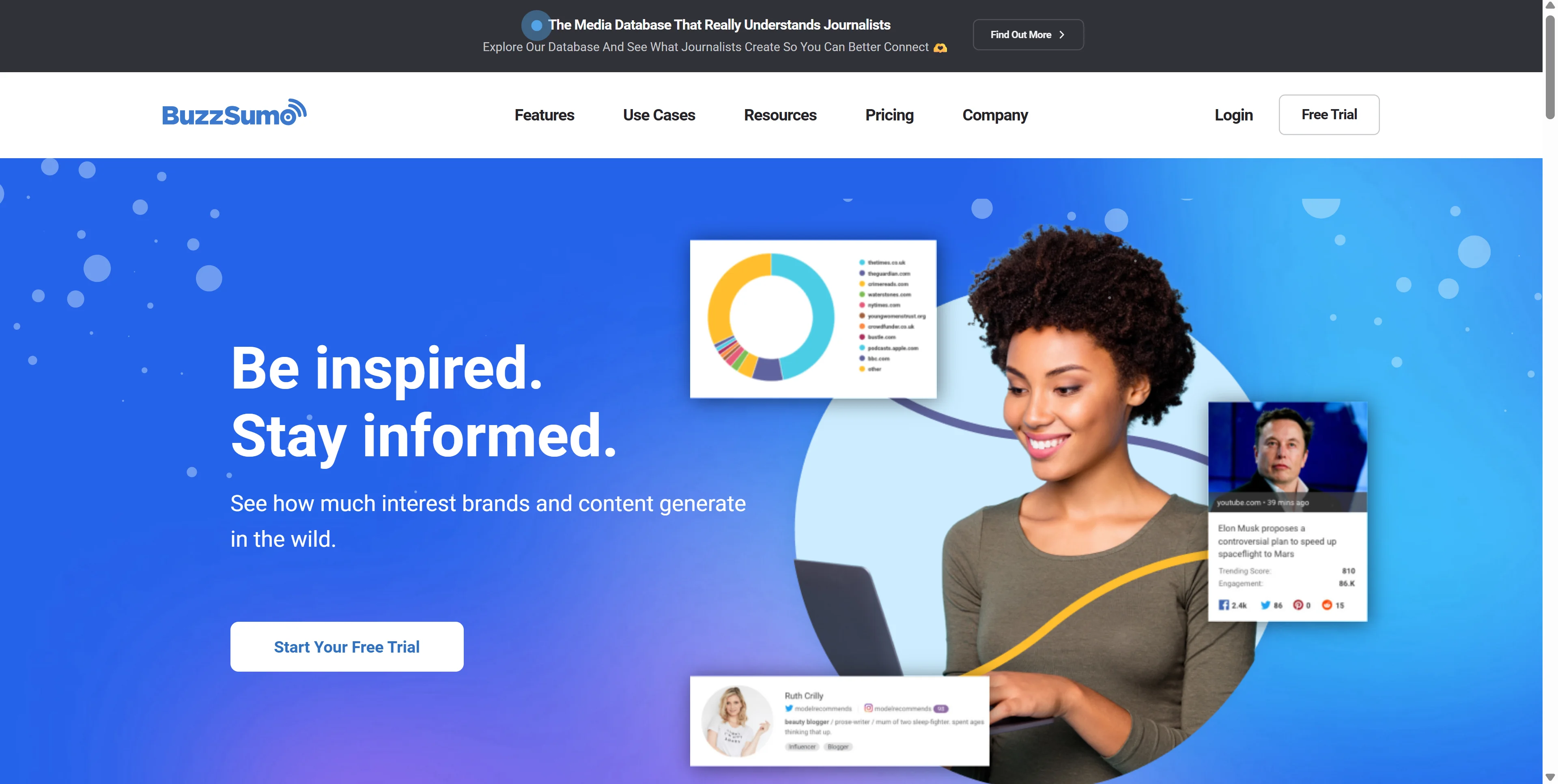 Pricing: Content Creation plan runs $199 per month, with higher tiers adding influencer identification and monitoring.
Key features: Trending content discovery, engagement and share data, influencer identification, content alerts, competitor content tracking.
Best for: Teams that want to validate topic ideas against real historical engagement data before committing writing resources.
Not for: Solo bloggers or small teams on a tight budget, where the price sits considerably higher than dedicated keyword tools offering similar directional insight.
Perplexity AI
Here's what I appreciate about Perplexity specifically. It built its whole identity around one thing every other AI research tool lacked at launch, cited, verifiable sources attached to every single answer instead of an ungrounded generated response you just have to trust. For genuine research rather than pure drafting, that citation trail is honestly the entire value.
I've watched content strategists increasingly use it as a fact-checking and background research layer before writing any brief, since verifying claims and pulling current data takes a fraction of the time it would through manual search across a dozen open tabs.
 Pricing: Free tier available. Pro runs $20 per month with unlimited Pro searches and access to multiple underlying AI models.
Key features: Cited, sourced answers, Deep Research mode for multi-source reports, Spaces for organizing ongoing research threads, model switching between GPT, Claude, and Gemini.
Best for: Content researchers and strategists who need verified, sourced information before writing rather than a general drafting assistant.
Not for: Teams looking for a full drafting or optimization tool, since Perplexity is purpose-built for research and doesn't try to be a writing platform.
Keyword Research and SEO Intelligence
Semrush
Semrush has spent over a decade consolidating what used to require five separate tools, keyword research, backlink analysis, site auditing, competitor tracking, and content optimization, into one connected platform. That's exactly why so many mid-size marketing teams I've seen standardize their entire content operation around it instead of piecing together point solutions.
For content strategy specifically, its Topic Research and SEO Content Template features generate structured briefs based on what's actually ranking, pulling real competitor data rather than generic keyword suggestions disconnected from search intent.
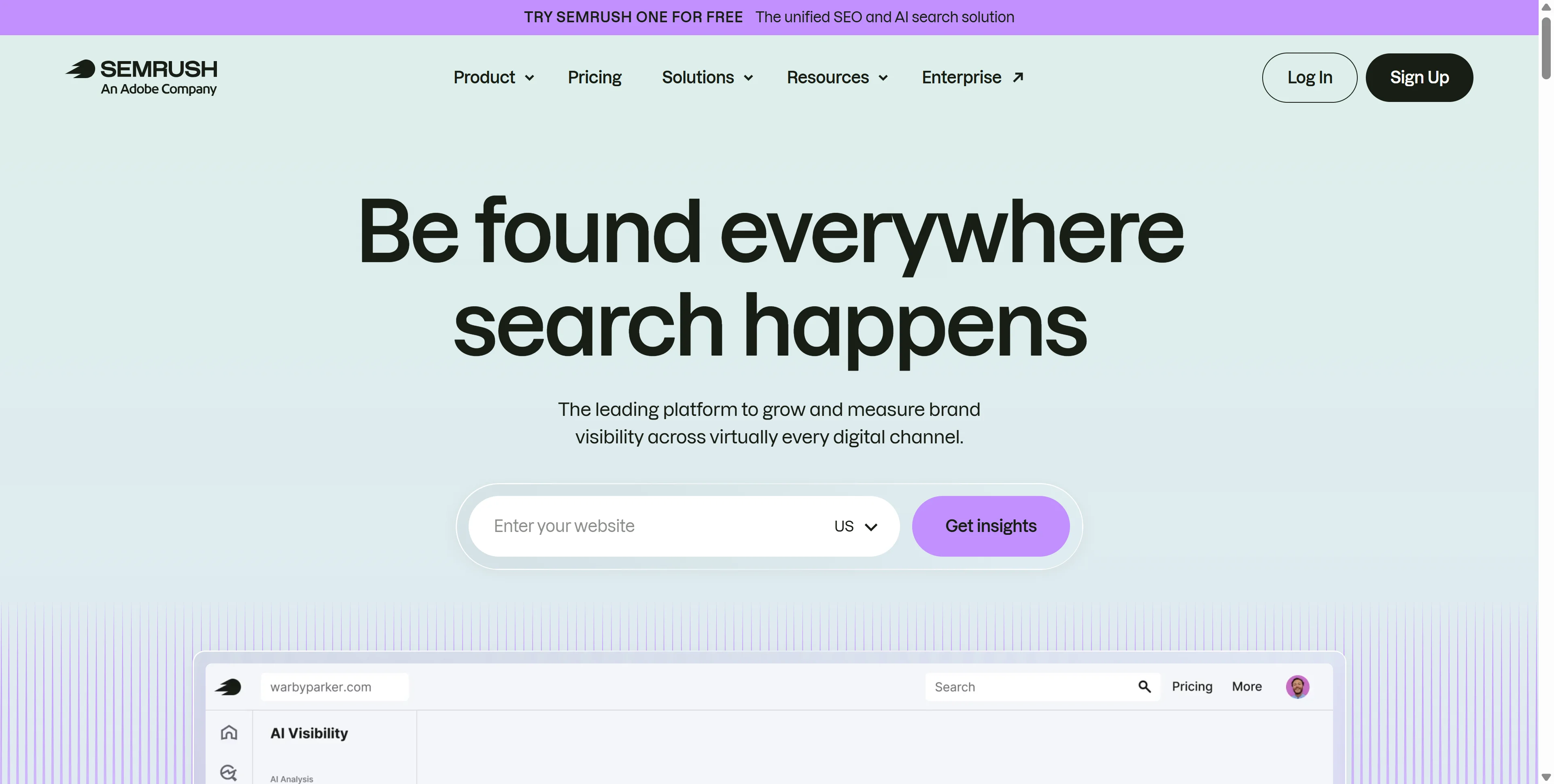 Pricing: Pro runs $139.95 monthly. Guru runs $249.95 monthly with content marketing toolkit access. Business runs $499.95 monthly.
Key features: Keyword research, SEO content templates, topic research, competitor content gap analysis, AI writing assistant, ContentShake AI integration.
Best for: Teams wanting one platform covering the full pipeline from research through optimization without stitching together separate tools.
Not for: Solo creators or very small teams, where the pricing and depth outweigh what a lighter tool delivers at a fraction of the cost.
Ahrefs
Ahrefs built its reputation almost entirely on backlink data depth, and it still maintains what I'd call the largest publicly accessible backlink index in the industry. That foundation extends directly into content strategy, since understanding which pages actually earn links matters a lot when you're planning content meant to rank sustainably, not just briefly.
Its Content Gap tool specifically reveals what competitors rank for that you don't, which turns competitive research into something you can actually act on in your content calendar rather than a vague strategic exercise.
 Pricing: Lite runs $129 monthly. Standard runs $249 monthly with deeper historical data access.
Key features: Content Gap analysis, Content Explorer for top-performing content discovery, keyword research with difficulty scoring, Site Audit, Rank Tracker.
Best for: Teams whose strategy is heavily backlink and organic-search driven, needing deep competitive keyword data.
Not for: Teams prioritizing paid search or social content, where Ahrefs' organic-search focus offers limited extra value.
Content Briefs and Optimization Scoring
Surfer SEO
Surfer made a specific, narrow bet when it entered the market, that content optimization could be reduced to a data-driven score comparing your draft against what's actually ranking for a given keyword. I think that bet paid off precisely because it turned a subjective question, "does this content feel comprehensive enough," into a measurable number writers could optimize against in real time.
The Content Editor scores drafts as you write, flagging missing terms, structural gaps, and length benchmarks pulled directly from top-ranking competitor pages for that exact query.
 Pricing: Essential runs $89 monthly. Scale runs $179 monthly with more article credits and team seats.
Key features: Real-time content scoring, AI content briefs, SERP analyzer, content planner, Google Docs and WordPress integrations.
Best for: Writers and editors who want real-time, data-backed guidance while drafting instead of a separate brief document to reference.
Not for: Teams wanting deep topic research or editorial calendar planning, since Surfer's strength is narrowly focused on optimization scoring.
Clearscope
Clearscope positioned itself from day one as the premium, agency-grade option in this space, and honestly, its pricing reflects that on purpose. Instead of competing on cost, it's built for integrating cleanly into existing workflows for larger teams and agencies managing high content volume with strict quality standards.
Its grading system, giving drafts a letter grade based on semantic relevance and term coverage, has genuinely become industry shorthand that I've seen teams reference even outside the tool itself.
 Pricing: Essentials starts around $189 monthly, scaling up based on report volume and team size.
Key features: Content grading, keyword reports, Google Docs and WordPress integration, competitor content analysis.
Best for: Agencies and larger content teams with established budgets who want the most polished, integration-friendly workflow available.
Not for: Freelancers and small businesses, where the price sits well above comparable functionality from Surfer or Frase.
Frase
Frase built its whole positioning around being the accessible, budget-conscious alternative to Clearscope and Surfer, without meaningfully compromising the core brief-generation piece that content teams actually need day to day. I'd recommend it specifically to teams graduating from manual brief writing but not yet ready for enterprise-tier pricing.
Its AI-generated briefs pull structure directly from top-ranking pages, cutting brief creation time from the hour-plus a strategist might spend manually down to a few minutes of review and refinement.
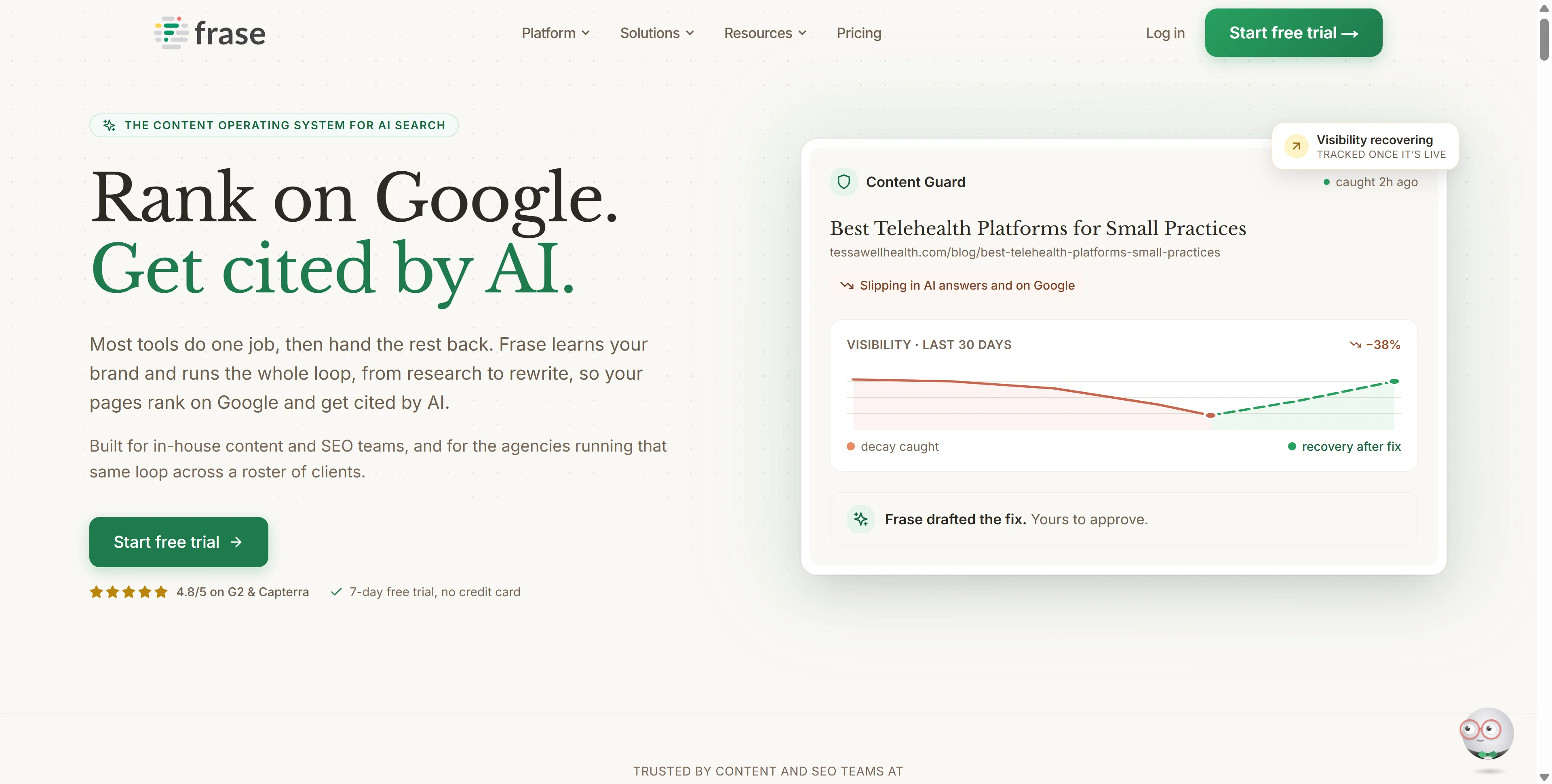 Pricing: Solo runs $45 monthly. Basic runs $115 monthly with more document credits.
Key features: AI content briefs, SERP research, content scoring, AI writing assistant, question and answer research tool.
Best for: Small to mid-size teams wanting genuine brief automation without enterprise-tier pricing.
Not for: Large agencies needing deeper team collaboration and volume-based reporting, where Clearscope's more mature tooling pulls ahead.
MarketMuse
Here's what makes MarketMuse different in my eyes. It operates one level above individual article optimization, focused instead on full site-wide content planning and topical authority mapping. Instead of asking "how do I optimize this one article," it asks "what does my entire content library need to actually dominate this topic cluster," which is a genuinely different, more strategic question.
Its Content Inventory and Personalized Content Score features analyze your existing published content against topic authority gaps, surfacing what needs refreshing versus what needs entirely new coverage.
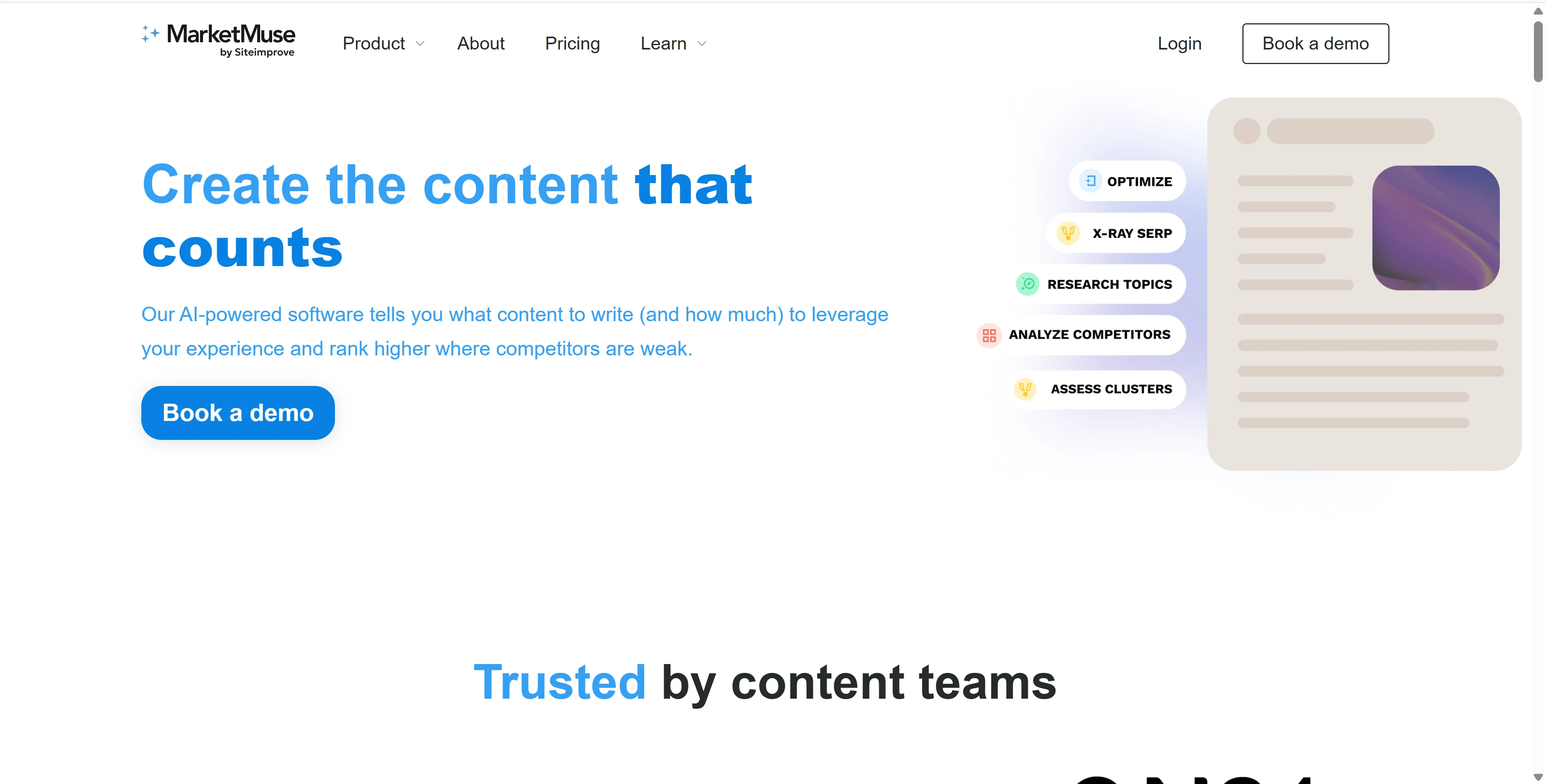 Pricing: Standard runs $149 monthly. Team runs $399 monthly with expanded seats and research capacity.
Key features: Topic modeling, content inventory analysis, content briefs, competitive content analysis, content scoring.
Best for: Teams managing large existing content libraries who need to identify strategic gaps and refresh priorities at scale.
Not for: Small teams just starting content production, where site-wide analysis offers limited value against a nearly empty library.
AI Drafting and Copywriting
Jasper
Jasper built its early reputation specifically around brand voice consistency at scale, letting larger marketing teams train the AI on established tone and messaging rather than generating generic output that needed heavy editing every single time. That brand-voice training layer is still its clearest differentiator against more generic writing assistants I've tested.
For content strategy specifically, Jasper's Brand Voice and Campaigns features let strategists set guardrails once that every piece of drafted content automatically respects, which cuts down the editorial cleanup that plagues less structured AI writing workflows.
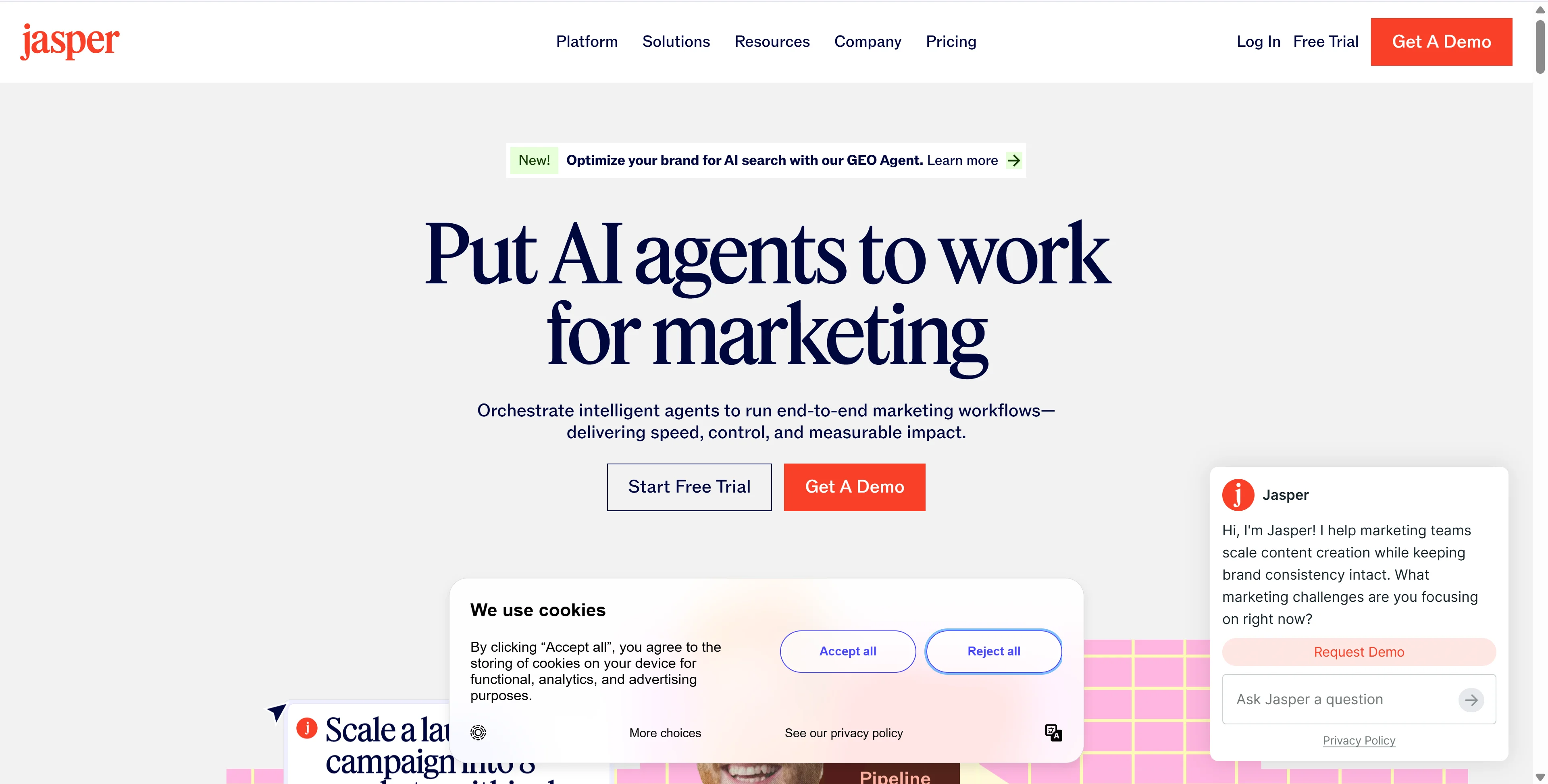 Pricing: Creator runs $49 monthly. Pro runs $69 monthly with team collaboration features.
Key features: Brand voice training, campaign templates, SEO mode integration, team collaboration, browser extension for on-page drafting.
Best for: Marketing teams needing consistent brand voice across many writers and a high volume of output.
Not for: Solo strategists or small teams where brand voice consistency across dozens of contributors isn't yet a real problem.
Copy.ai
Copy.ai carved out its lane specifically around short-form marketing copy, ad variations, email subject lines, and social captions, rather than competing directly for long-form blog drafting the way Jasper does. You can see that focus in how its workflow templates are organized around discrete marketing tasks rather than one blank canvas.
Its Workflows feature increasingly automates multi-step content processes, generating a full campaign's worth of variations from one input brief rather than requiring separate prompts for each asset.
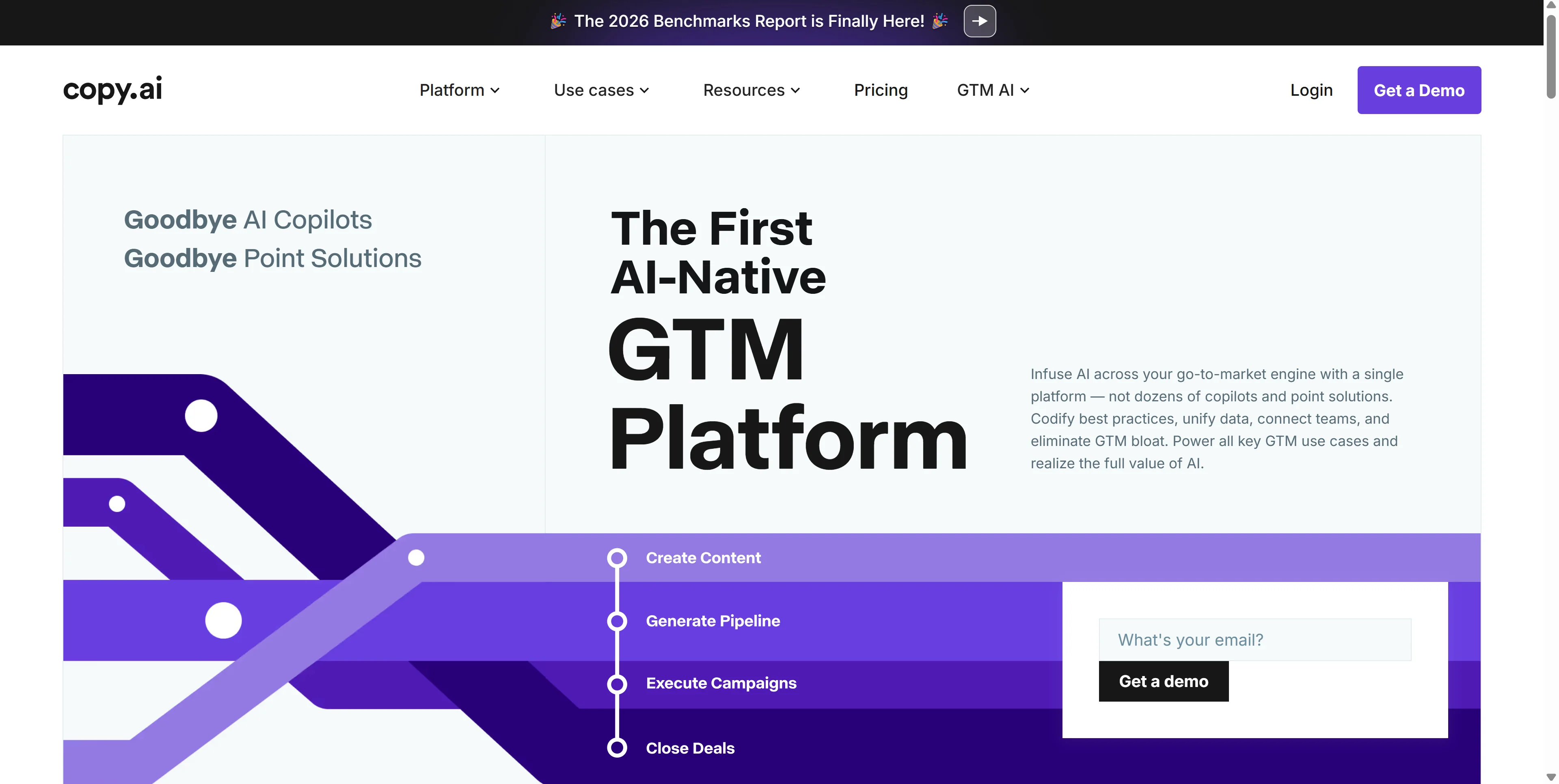 Pricing: Starter runs $49 monthly. Advanced runs $249 monthly with expanded workflow automation.
Key features: Marketing copy templates, multi-step workflow automation, brand voice settings, team workspaces.
Best for: Marketing teams needing high-volume short-form copy alongside their core content strategy.
Not for: Teams whose primary need is long-form SEO content, where dedicated blog-focused tools handle structure and depth better.
Writesonic
Writesonic distinguished itself early by baking SEO functionality directly into the drafting workflow instead of treating optimization as a separate downstream step handled by a different tool. I think that integrated approach appeals specifically to smaller teams who want one subscription covering both drafting and basic optimization rather than paying for two separate platforms.
Its Article Writer feature pulls SERP data automatically before drafting, aiming to produce a first draft that's already reasonably optimized instead of needing a full separate optimization pass afterward.
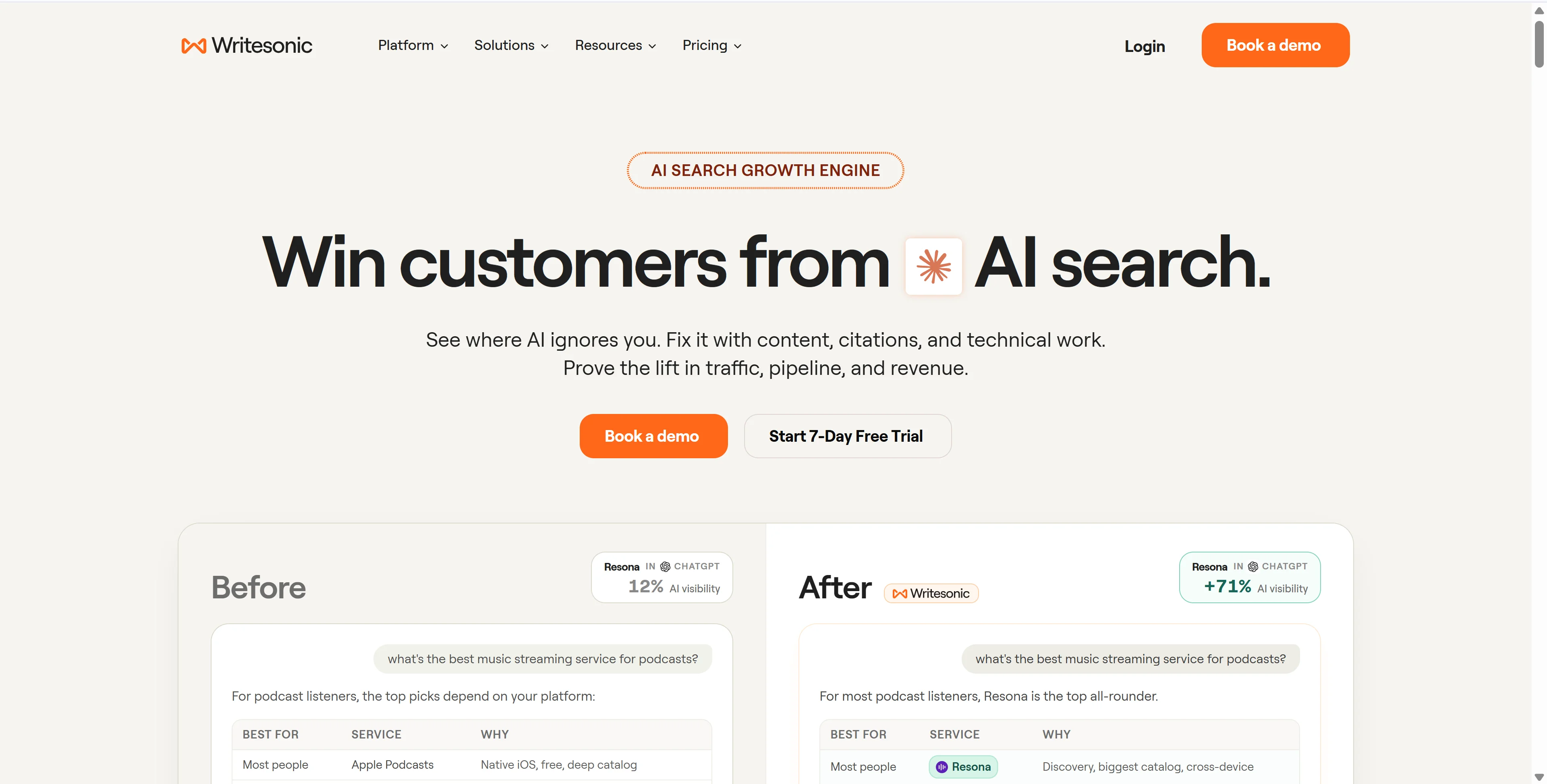 Pricing: Individual plans start around $39 monthly, scaling with word count and team features.
Key features: SEO-integrated article writing, Chatsonic conversational assistant, bulk content generation, plagiarism checking.
Best for: Small businesses and solo marketers wanting drafting and basic optimization bundled into one affordable subscription.
Not for: Teams needing deep, granular optimization scoring, where dedicated tools like Surfer or Clearscope give more precise guidance.
Planning, Governance, and CRM-Integrated Tools
Notion AI
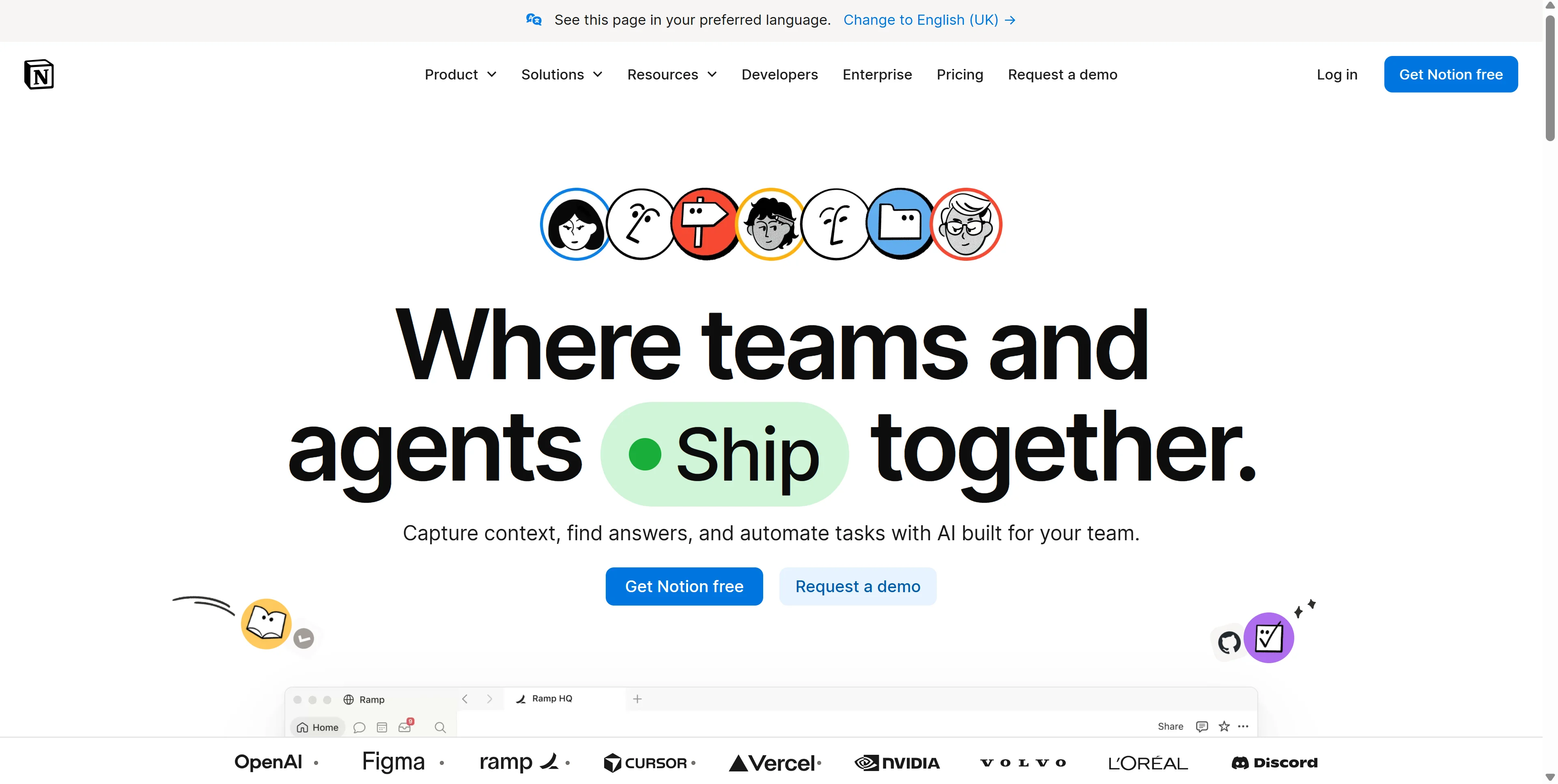
Notion AI didn't launch as a content strategy tool, it launched as an AI layer added onto Notion's existing flexible workspace, which is exactly why it ends up functioning as content governance infrastructure for teams already living inside Notion for documentation and project management. The AI features feel native rather than bolted on because they're sitting inside a workspace people were already using every day.
For content operations specifically, I've seen teams build editorial calendars, content briefs, and publishing checklists as Notion databases, with the AI layer helping draft, summarize, and organize without needing a separate specialized tool.
 Pricing: Notion AI adds $10 per member monthly on top of a base Notion plan.
Key features: AI writing and summarization, database-driven editorial calendars, content brief templates, team collaboration, integrated project management.
Best for: Teams already using Notion for broader project management who want content planning to live in the same connected workspace.
Not for: Teams needing dedicated SEO scoring or keyword research, since Notion AI offers none of that specialized functionality natively.
ContentShake AI
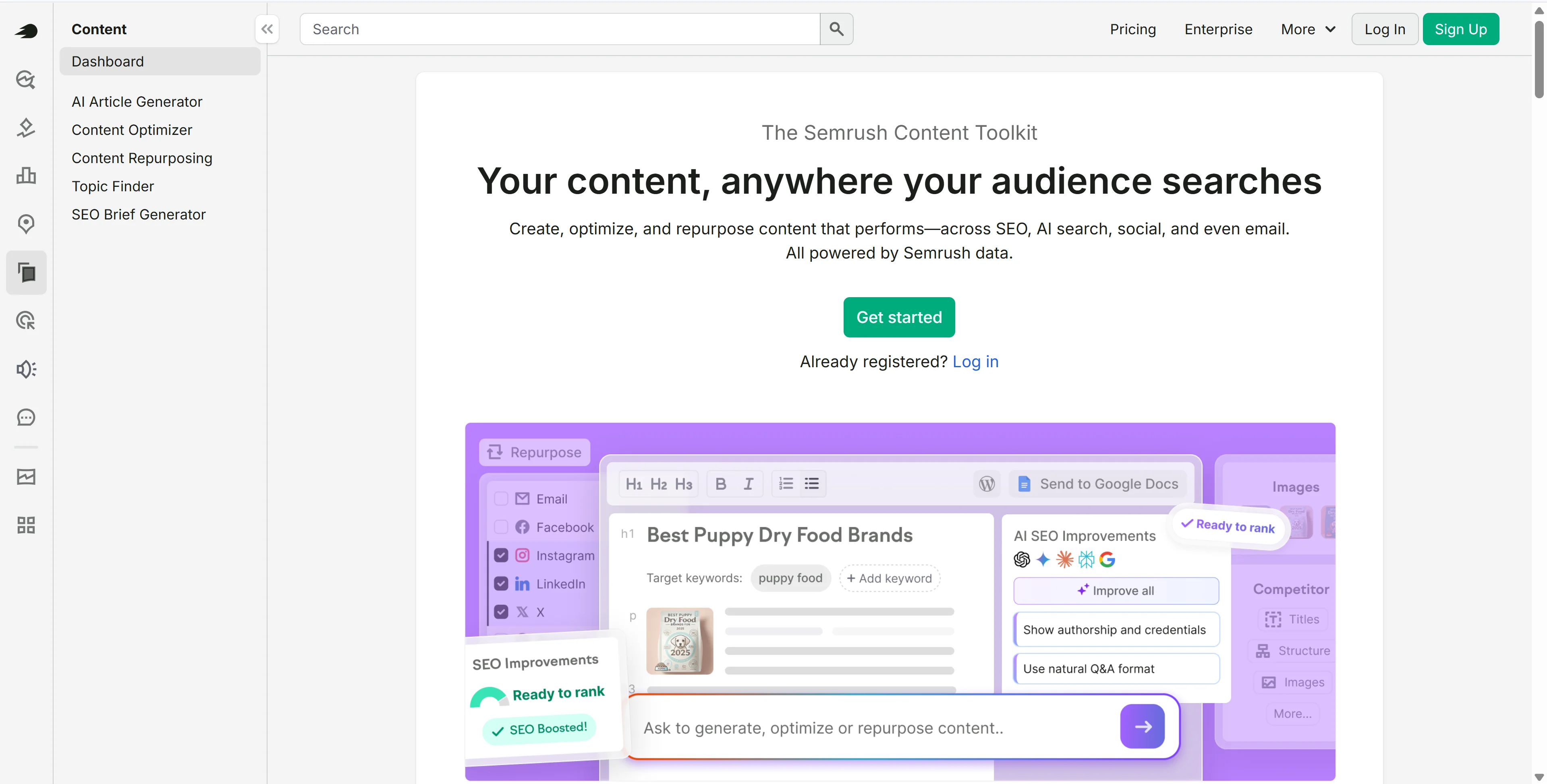
ContentShake AI is basically Semrush's more accessible, standalone entry point into AI content generation, built for solo marketers and small businesses who want Semrush's underlying SEO data without committing to the full, considerably pricier Semrush suite. I'd call it a deliberate lighter on-ramp rather than a scaled-down compromise.
The tool generates full articles using real-time SEO data pulled from Semrush's database, aiming for genuinely publish-ready drafts instead of rough outlines needing extensive additional research.
 Pricing: Starts around $60 monthly.
Key features: AI article generation with SEO data integration, competitor content analysis, social media post generation, brand voice customization.
Best for: Solo marketers and small businesses wanting Semrush-quality SEO data without the full platform's price tag.
Not for: Larger teams needing the complete toolkit including backlink analysis and site auditing, where the full Semrush suite makes more sense.
HubSpot AI
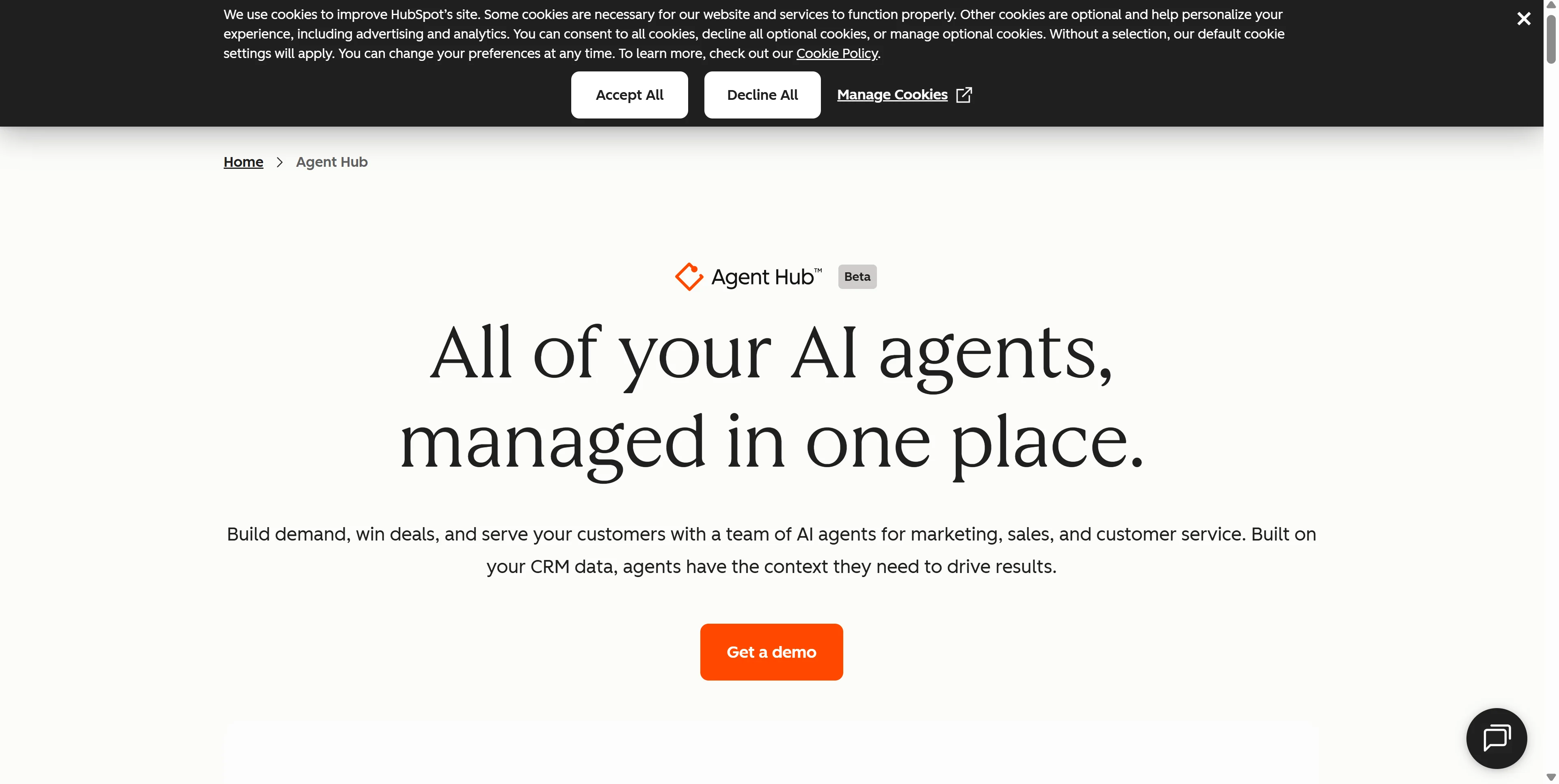
Here's what I think most standalone content tools can't replicate, and it's the entire reason HubSpot's AI content tools exist, direct integration with your actual CRM and customer data. Content suggestions and drafting assistance get informed by real audience and lead behavior sitting inside the same platform, instead of a disconnected content tool guessing at audience needs.
For teams already running HubSpot as their marketing and sales hub, this connectivity turns content strategy into something genuinely tied to pipeline and conversion data rather than a content team operating in isolation from revenue.
 Pricing: Included within HubSpot Marketing Hub tiers, starting around $20 monthly for Starter and scaling considerably at Professional and Enterprise levels.
Key features: AI content assistant, CRM-integrated audience insights, campaign content generation, performance tracking tied to actual conversion data.
Best for: Teams already running HubSpot as their core marketing platform who want content strategy directly connected to lead and revenue data.
Not for: Teams not using HubSpot for CRM or marketing automation, where that integration advantage, the entire reason to choose it over a standalone tool, disappears.
How AI Actually Improves Content Planning
Here's the honest shift I've seen. AI didn't replace strategic thinking in content planning. It compressed the time between having a strategic question and getting a data-backed answer to it. Topic research that used to take hours of manual SERP analysis now takes minutes. Brief creation that ate a strategist's full afternoon now takes a review pass on an AI-generated starting point.
That compression matters most for smaller teams without a dedicated research analyst, since these tools effectively hand a solo content strategist research capacity that used to require a full support team.
Features Actually Worth Checking Before You Buy
Beyond the individual comparisons above, here's what I think separates a genuinely useful platform from one that just looks impressive in a sales demo.
Integration depth matters more than any single feature, since a tool that doesn't connect to your existing CMS, Google Docs, or project management platform creates copy-paste friction that eats away at the time savings AI is supposed to give you. Data freshness deserves real scrutiny too, since SEO recommendations based on stale SERP data actively mislead your strategy instead of supporting it.
Team collaboration capability becomes essential the moment more than one person touches the content pipeline, and export flexibility, being able to move briefs and drafts cleanly into your actual publishing workflow, is what stops these tools from becoming isolated silos disconnected from where content actually gets published.
Free vs Paid: What You Actually Lose on Free Tiers
Most tools here offer some free access, but I want to be honest about how limited that really is before you assume it covers real production needs.
Tool | Free Tier Reality |
|---|---|
Perplexity AI | Genuinely usable for research, limited Pro searches |
Notion AI | Limited AI credits before requiring paid add-on |
Frase | No meaningful free tier, trial only |
Semrush | Very limited free account, mostly for evaluation |
Ahrefs | Free webmaster tools only, no content strategy features |
The honest pattern I keep seeing is that free tiers work fine for evaluation and occasional light use, but any team producing content at real volume hits paid tier requirements within the first month of genuine use.
Common Mistakes I See Teams Make With These Tools
Treating AI-generated drafts as publish-ready without editorial review is probably the most damaging habit out there, since even well-optimized AI output tends to lack the specific brand voice and genuine expertise that actually differentiates content worth ranking. Buying multiple overlapping tools covering the same function, running Surfer and Clearscope side by side, for instance, wastes budget without adding proportional value.
Ignoring the research and email content side of content strategy is another gap I see constantly. Content strategy doesn't end at the blog post. It extends into how that content gets distributed and nurtured through email, which is where a tool like TrueEmailer fits into the bigger picture, turning published content into structured email campaigns instead of treating distribution as an afterthought handled manually.
How to Choose the Right Tool for Your Actual Stack
My honest advice is to start by mapping your specific workflow gap rather than shopping by feature list. If your team already generates strong topic ideas but struggles with structuring comprehensive briefs, Frase or Surfer solve that specific problem. If your challenge is drafting speed and consistency at scale, Jasper's brand voice training addresses that directly.
I'd avoid buying a full suite platform like Semrush purely for its content features if you're not also using its SEO and competitor research capabilities, since you'll be paying for breadth you won't touch. For a broader look at how content marketing performance benchmarks compare across industries, the Content Marketing Institute's annual research is still the most cited independent data source for understanding what actually correlates with content strategy success, beyond any single tool's own case studies.
FAQs
What are the best AI tools for content strategy in 2026?
Surfer SEO and Clearscope lead optimization scoring, Semrush and Ahrefs lead keyword and competitive research, and Jasper leads AI drafting at scale.
Can AI actually create a content calendar?
Yes, tools like Notion AI and MarketMuse support structured editorial calendar planning, though strategic prioritization still benefits from human oversight.
Is AI content strategy software worth paying for?
For teams producing content regularly, yes, since the time saved on research and brief creation typically outweighs subscription costs within the first month.
Can AI replace a content strategist entirely?
No, AI compresses research and drafting time significantly but still needs strategic judgment on audience needs, brand voice, and priority topics.
Which AI tool is best for small businesses on a budget?
Frase and Writesonic offer strong value at lower price points compared to enterprise-tier tools like Clearscope or the full Semrush suite.