

If you are looking for intuo.io, the short version is that it no longer exists under that name.
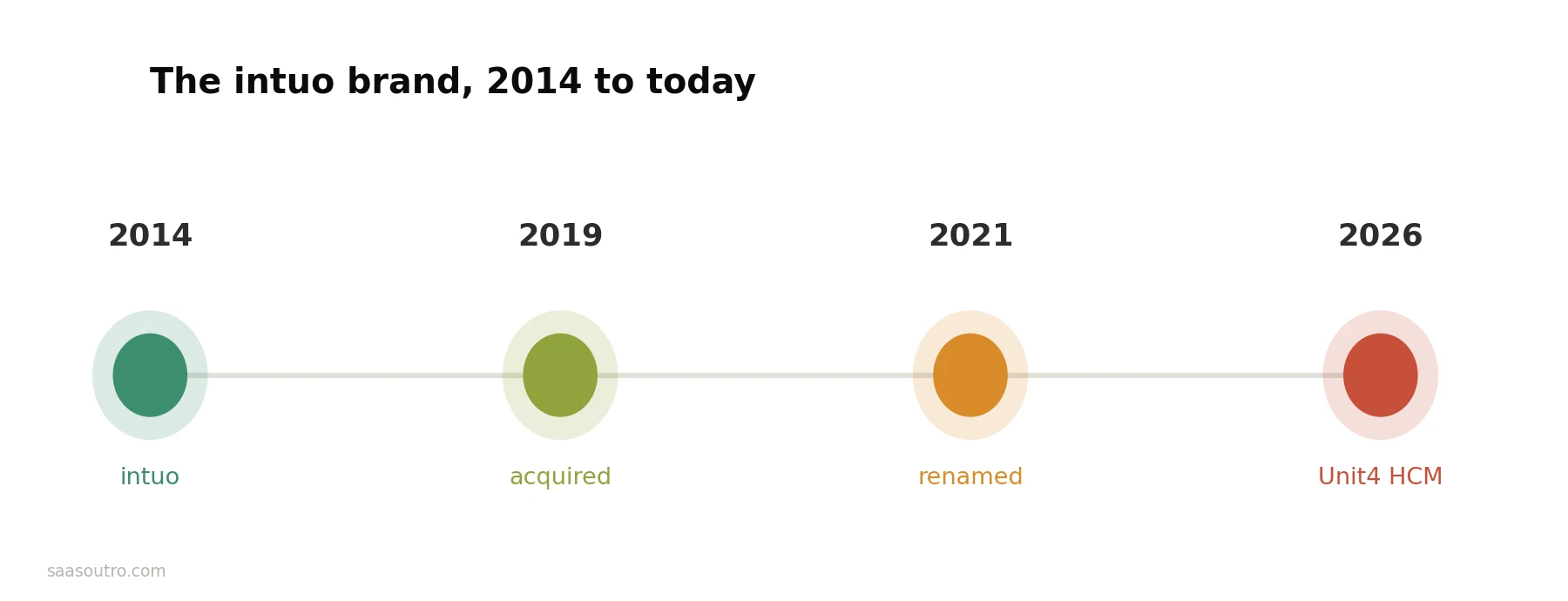
Intuo was founded in Ghent in 2014, acquired by Unit4 in 2019, and then renamed. The company's own announcement puts it plainly: the intuo name no longer exists, and from January 2021 the product became Unit4 Talent Management, part of the wider Unit4 HCM suite.
So if you searched for an intuo replacement after landing on a directory listing or an old blog post, that listing was never updated. The intuo.io domain itself now simply points visitors at Unit4.
That means I am writing this for two different readers, and you should skip to whichever one you are.
If you never used intuo and just want a modern equivalent, go to the list. Intuo was a talent enablement platform doing continuous feedback, objectives, one-to-one conversations, engagement surveys and light learning, so that is what you are replacing.
If you are an existing customer now sitting inside Unit4 HCM and thinking about leaving, read the migration section too. Your feedback history and past conversations are the part that will hurt.
 A note on what this is based on. I have not run any of these platforms myself. Everything here comes from intuo's own announcement, Unit4's materials, vendor pricing pages where they publish one, and recent comparison research for the ones that quote privately. Where a figure is reported rather than published, I say so.
What intuo Actually Did, So You Replace the Right Thing
Before picking alternatives to intuo, I would be precise about what it covered, because "talent management software" means five different things depending on who is selling it.
Intuo handled guided coaching conversations, agile objective setting and goal setting through OKRs, 360 feedback and peer feedback requests, praise and recognition, onboarding, career development plans, social learning through a light learning management system, people analytics, and company-wide employee engagement surveys.
What it did not do is core HR. It was never an HRIS or a full human capital management suite. It sat next to your system of record and handled the soft layer, which is why its own reviewers noted you still needed a core HR platform underneath it.
I would let that distinction decide your shortlist. If you only ever used the performance and engagement side, a focused tool will replace it. If you have since lost your HRIS as well, you need something broader.
The Annual Minimums Nobody Puts in the Comparison Table
I want to raise this before the list, because it changes which of these you can actually afford.
Almost every platform in this category quotes per employee per month, which sounds manageable. Then I found the contract minimums.
Lattice sets a floor reported at around $4,000 a year. Leapsome's Customer Success tier reportedly carries a $6,000 a year minimum with a one-year minimum term. And Workleap, which owns Officevibe, moved in 2026 to a flat platform fee reported at around $4,999 a year rather than the cheap per-seat option it used to be.
Run that for a 40-person company and a $4,000 floor is not $4 per employee per month. I make it closer to $8. The sticker price and the invoice are different documents.
Most of this category is also quote-only. Culture Amp, Lattice and Leapsome do not publish full rates, which is why HR teams walk into demos without knowing whether they are looking at $3 or $25 per person. I have flagged which ones publish real numbers below, because I think that transparency is worth something on its own.
The 10 Best intuo Competitors and Alternatives
1. Leapsome
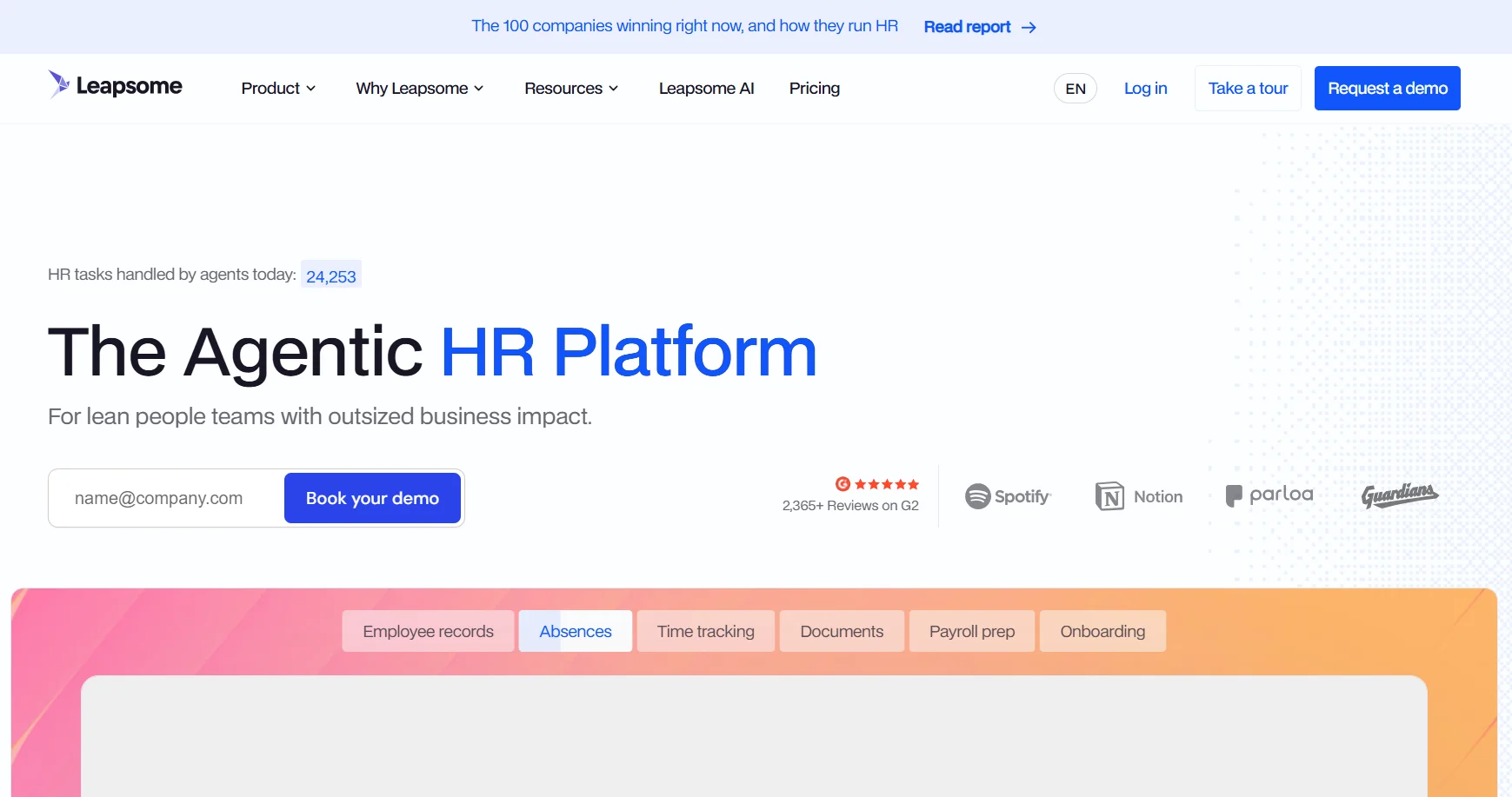 Of all the software like intuo I compared on paper, Leapsome is the closest match to what intuo was trying to be. It covers surveys, reviews, goals and OKRs, learning, compensation and even light HRIS, absence and time tracking, so it can replace several tools rather than sit beside them.
That breadth is the reason I would start here. Intuo customers tend to want the whole soft layer in one place, and Leapsome is the strongest option for that.
I could not get a current published figure. Pricing is modular and quote-gated. Historically the modules ran roughly $3 to $7 per employee per month, and there is a 14-day free trial with no setup fee. Budget for the minimum term.
2. Lattice
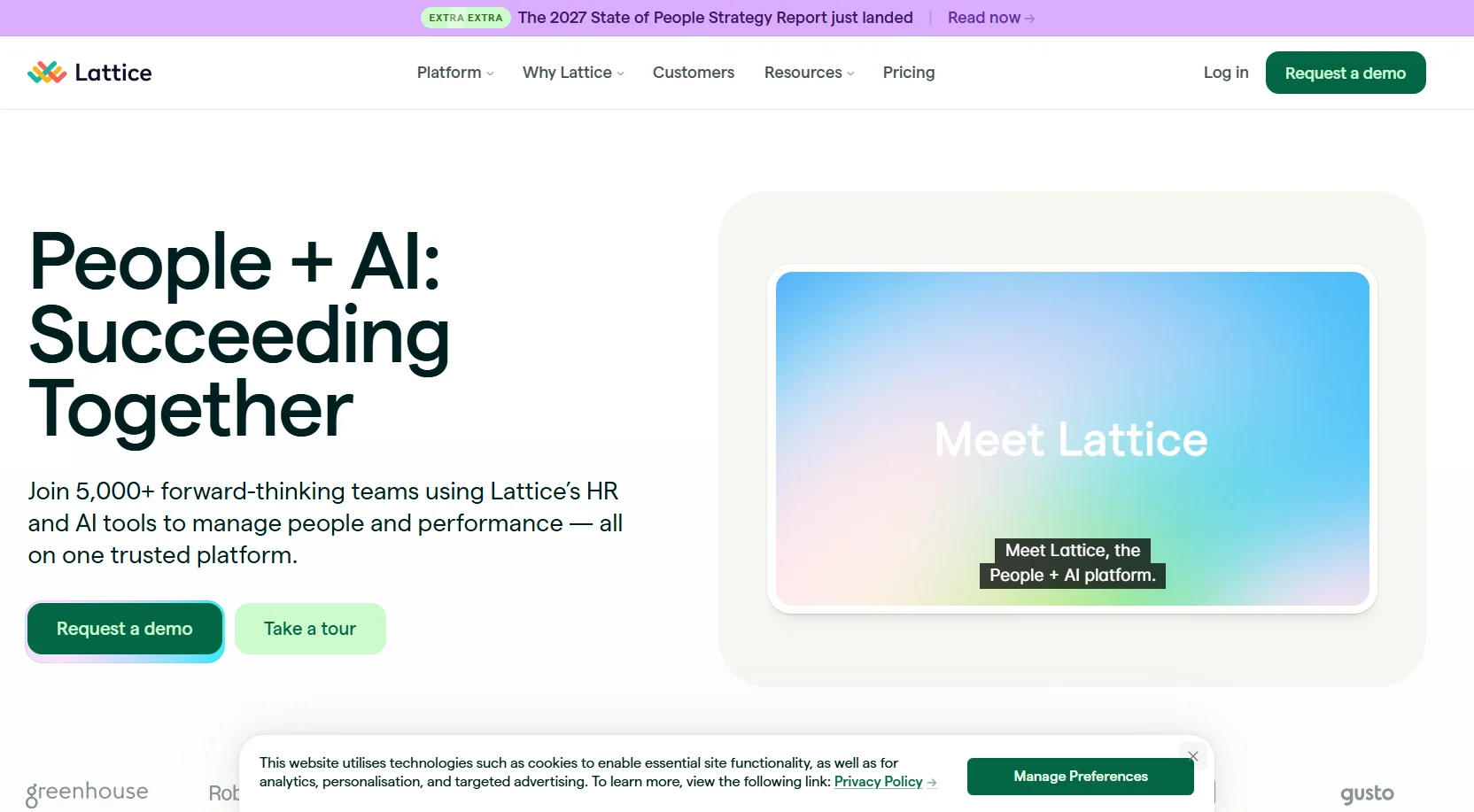 Lattice is the mid-market default for performance management tied to engagement. Reviews, goals, engagement surveys, compensation and development all connect.
It is also the most structured of the bunch. If your problem is that managers do not run consistent review cycles, I would let Lattice impose a process on them.
Pricing is per module, with performance as the base and engagement as an add-on on top. Expect $11 or more per person per month for a realistic bundle, plus that annual floor.
3. 15Five
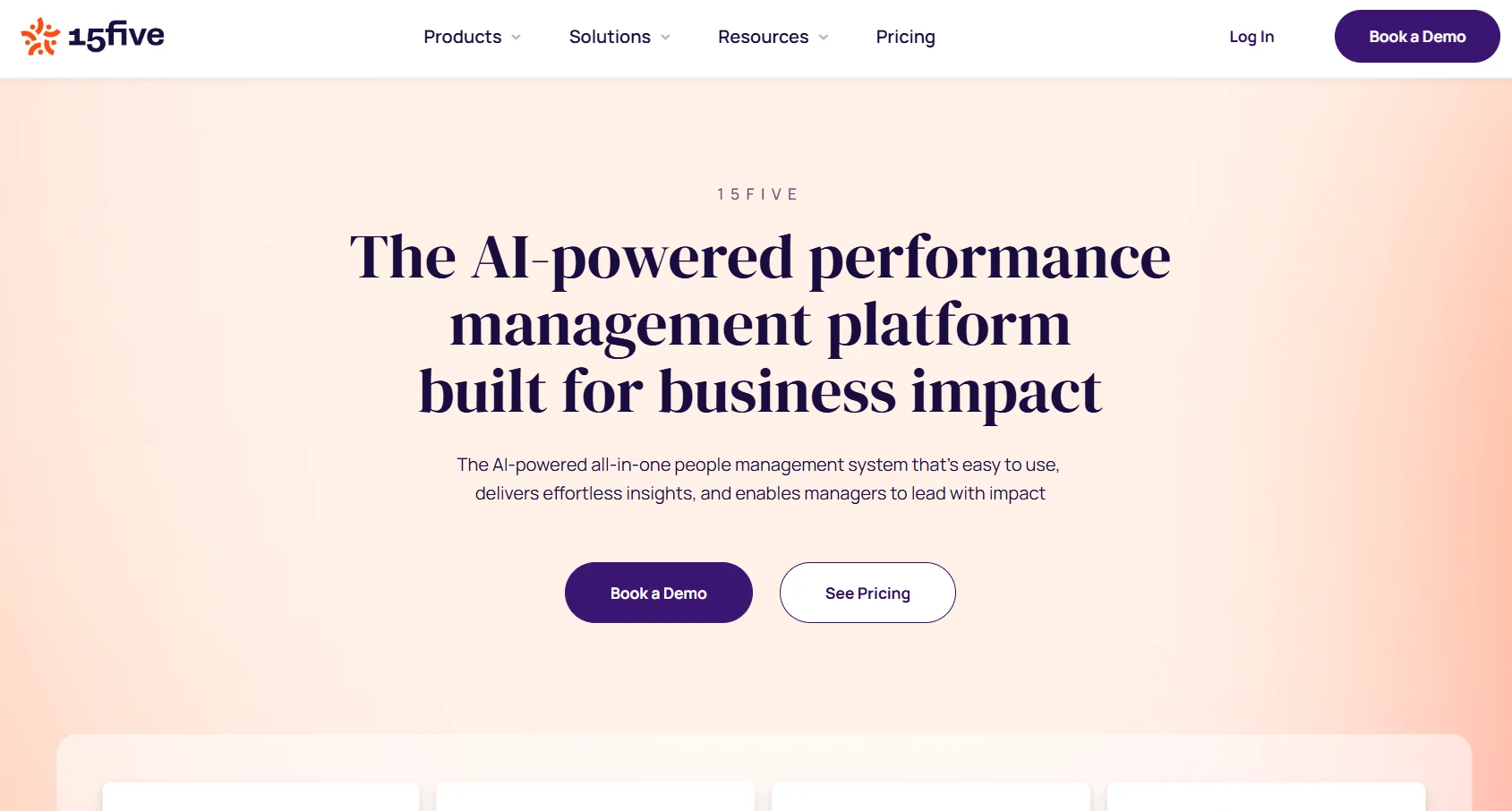 15Five is the one platform here that publishes proper prices, and I rate it for that alone. Engage is $4 per user per month, Perform is $11, and Total Platform is $16, all billed annually.
What I like about it is that the product is organised around the manager and employee relationship rather than around modules. Weekly check-ins, continuous feedback, light reviews. If what you valued in intuo was the guided conversation, this is the nearest thing.
Watch the add-ons. Coaching content and AI manager tools sit outside the base plan.
4. Culture Amp
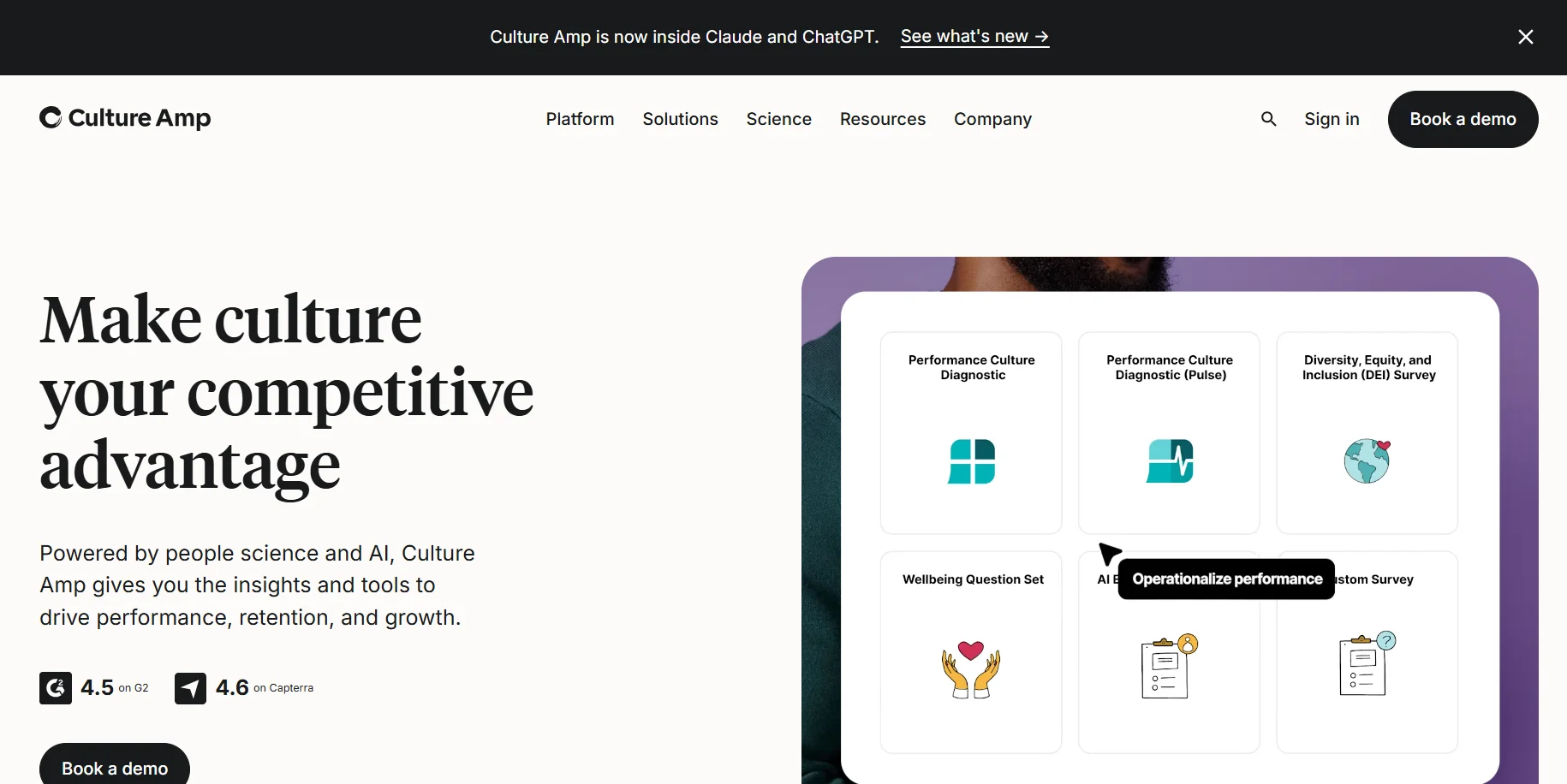 Culture Amp is where you go if engagement surveys are the point. The survey design is built on organisational psychology research and the benchmarking is the deepest available.
It is quote-only, with reported ranges from roughly $5 to $14 per employee per month and annual totals that vary enormously by headcount. It is also not an all-in-one suite, so if you need OKRs, learning or compensation you will be adding tools.
I would put it at companies over 200 people with someone whose actual job is acting on the data. Below that I think it is overkill.
5. Small Improvements
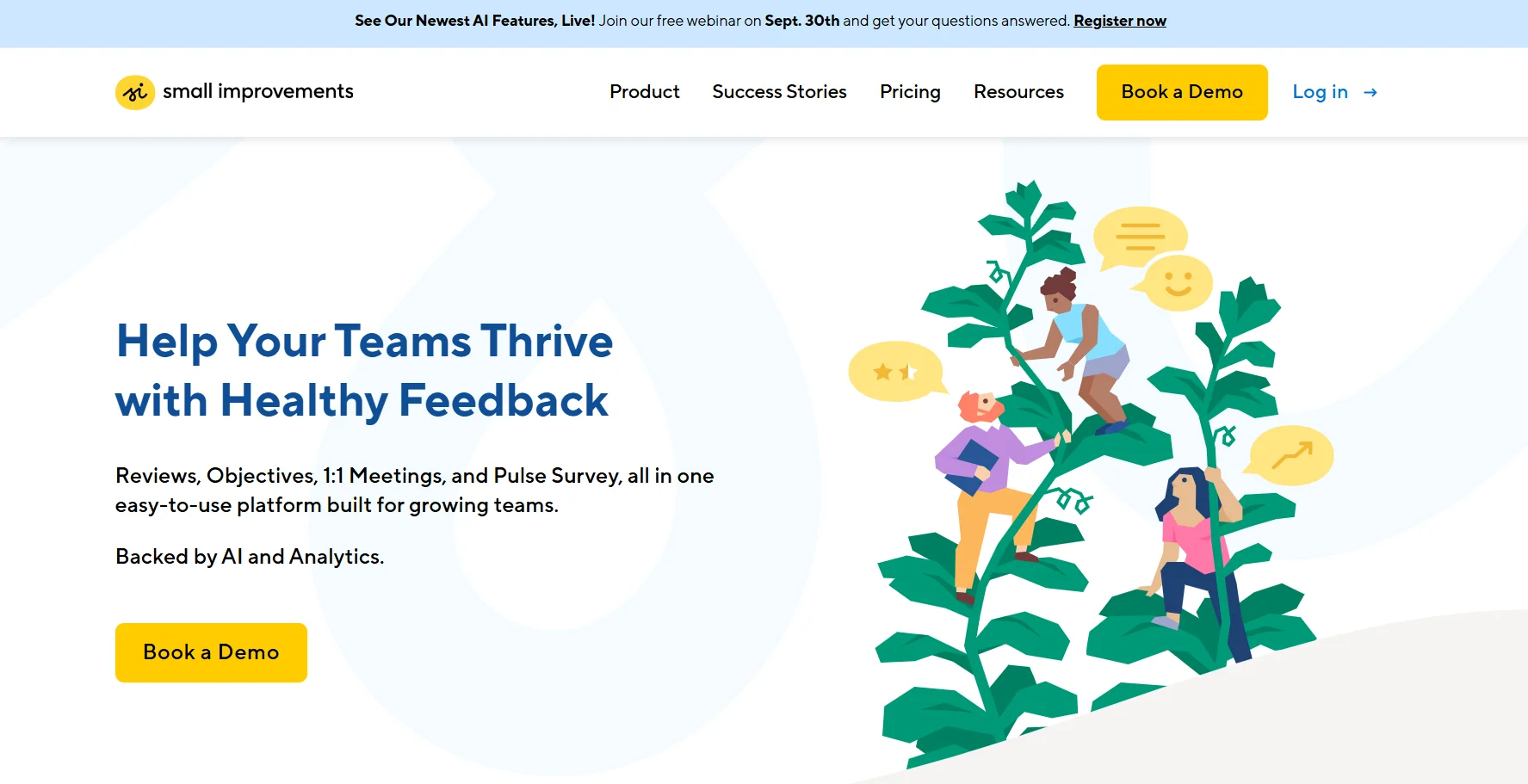 Small Improvements is my pick for companies that found intuo about right in scope and do not want to move up to an enterprise suite.
Reviews, 360 feedback, objectives and one-to-ones, done simply. It has been around a long time and it does not try to sell you a platform.
If your team is under 200 people and you want performance reviews that people will actually complete, this is a sensible landing spot.
6. Workleap Officevibe
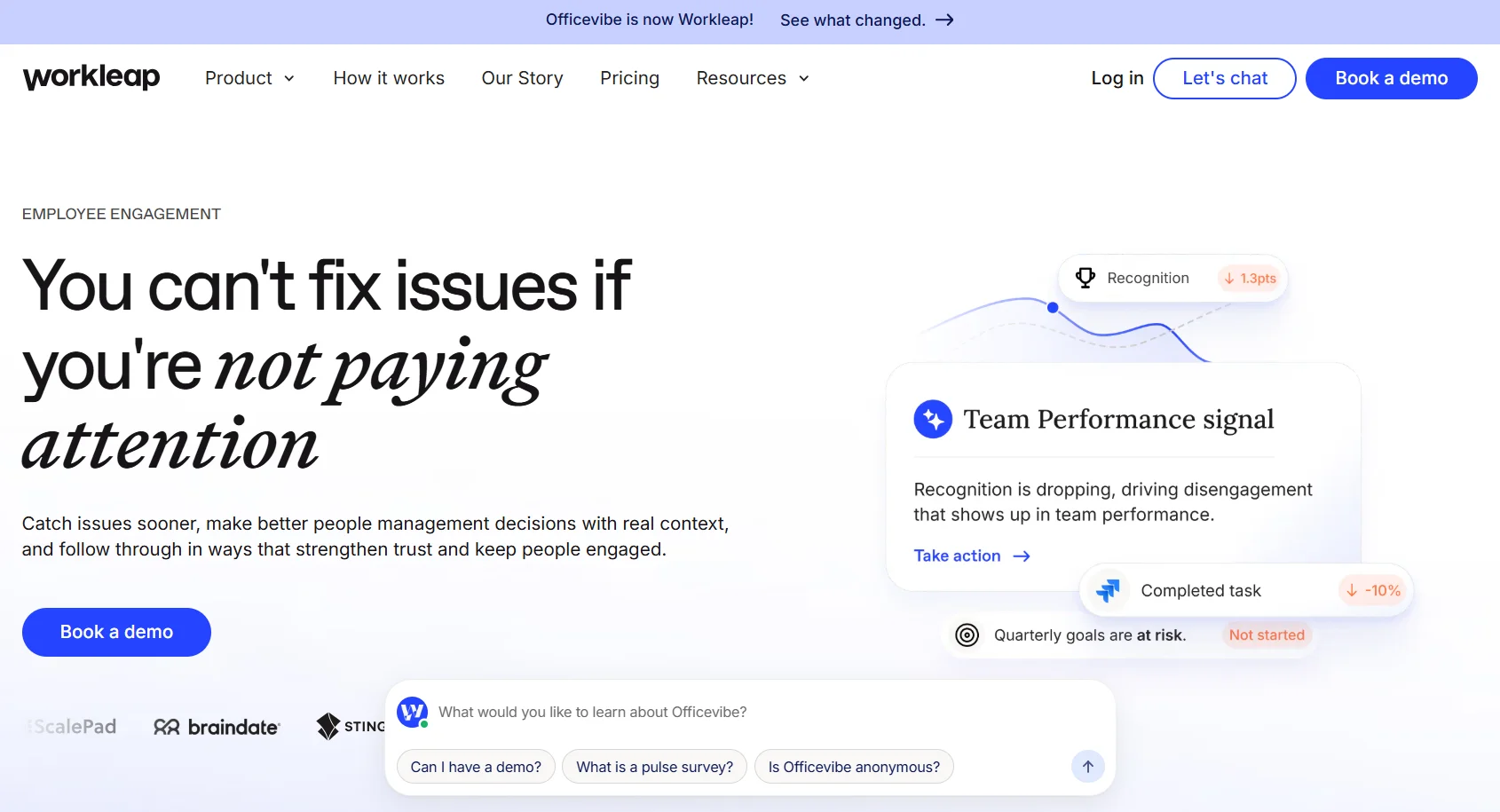 Officevibe was for years the cheap and cheerful pulse survey tool, and it is still the simplest to run. Automated weekly pulses, anonymous feedback, manager-friendly reporting.
The pricing changed though, and I would check it before shortlisting. Workleap moved to a flat annual platform fee rather than per-seat, reported at around $4,999, which means it is no longer the budget option for a small team. Confirm the current number before assuming it undercuts anything.
7. PerformYard
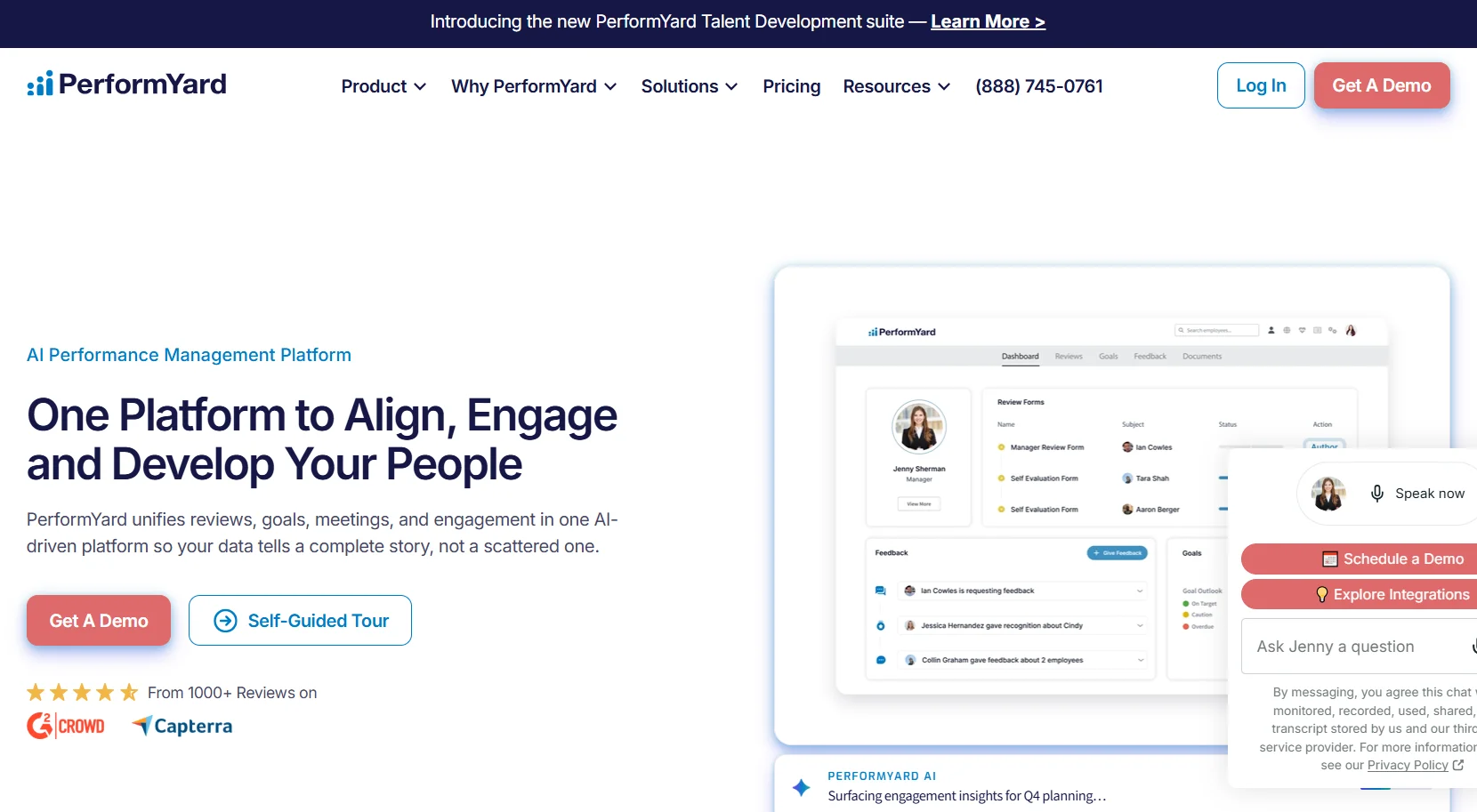 PerformYard is the flexible one, and the one I would suggest Rather than imposing a review process, it lets you build whatever cycle you already run, which suits companies with an unusual or heavily customised approach.
Engagement features exist but are lighter than the others here. Pricing is quote-based.
8. Personio
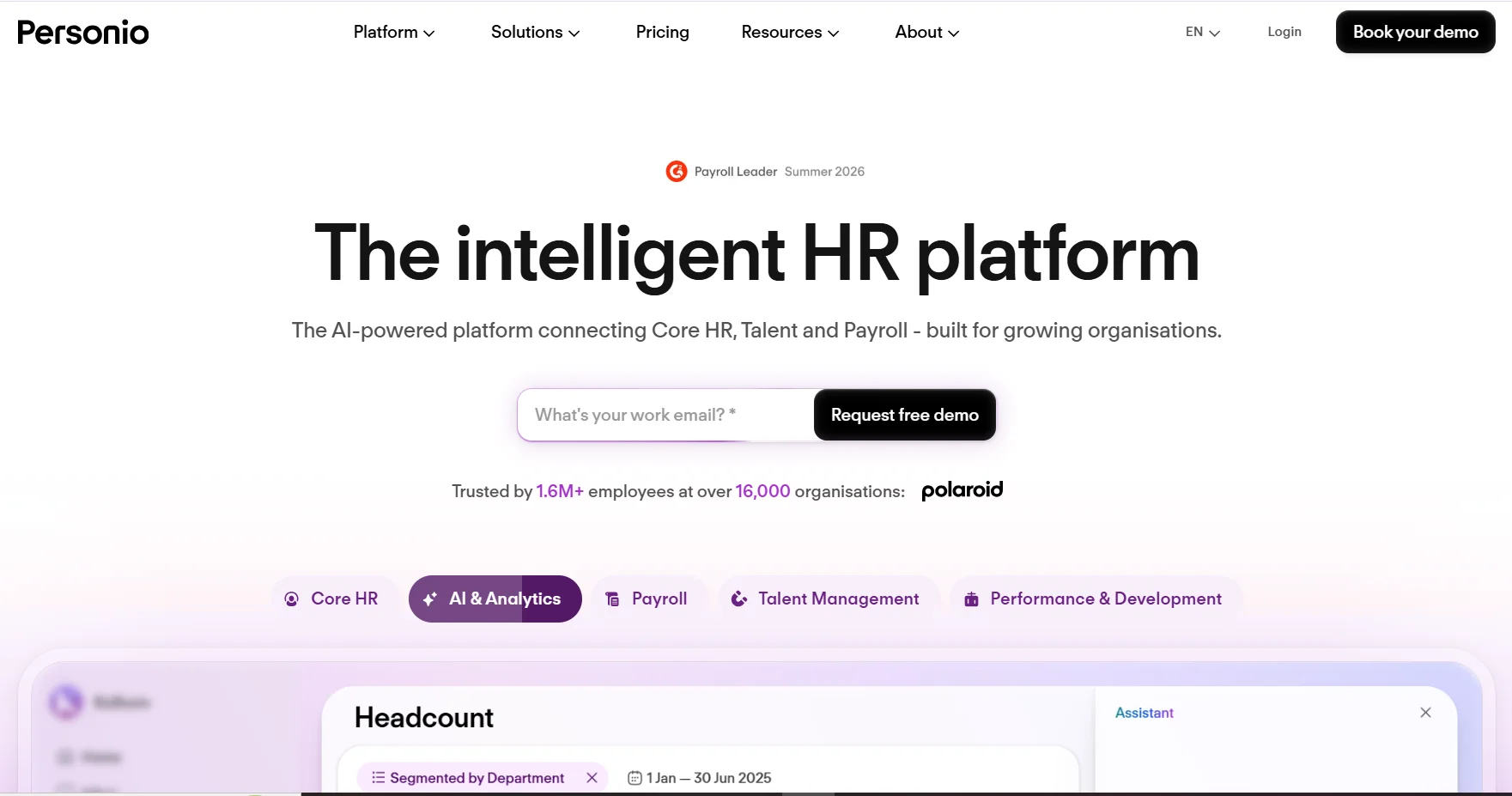 If losing intuo also left you without a proper HR system, Personio is the European answer. Core HR, absence, payroll integrations, recruiting and performance in one platform, built for mid-market companies in Europe.
It is a bigger commitment than a performance tool. But if you are running HR on spreadsheets plus a soft layer, I would seriously consider replacing both at once rather than one.
9. HiBob
 HiBob covers similar ground to Personio with a stronger focus on culture and employee experience. Good for distributed teams and companies that care about how the product feels to ordinary employees rather than to HR.
Quote-based, and priced for mid-market rather than small teams.
10. Winningtemp
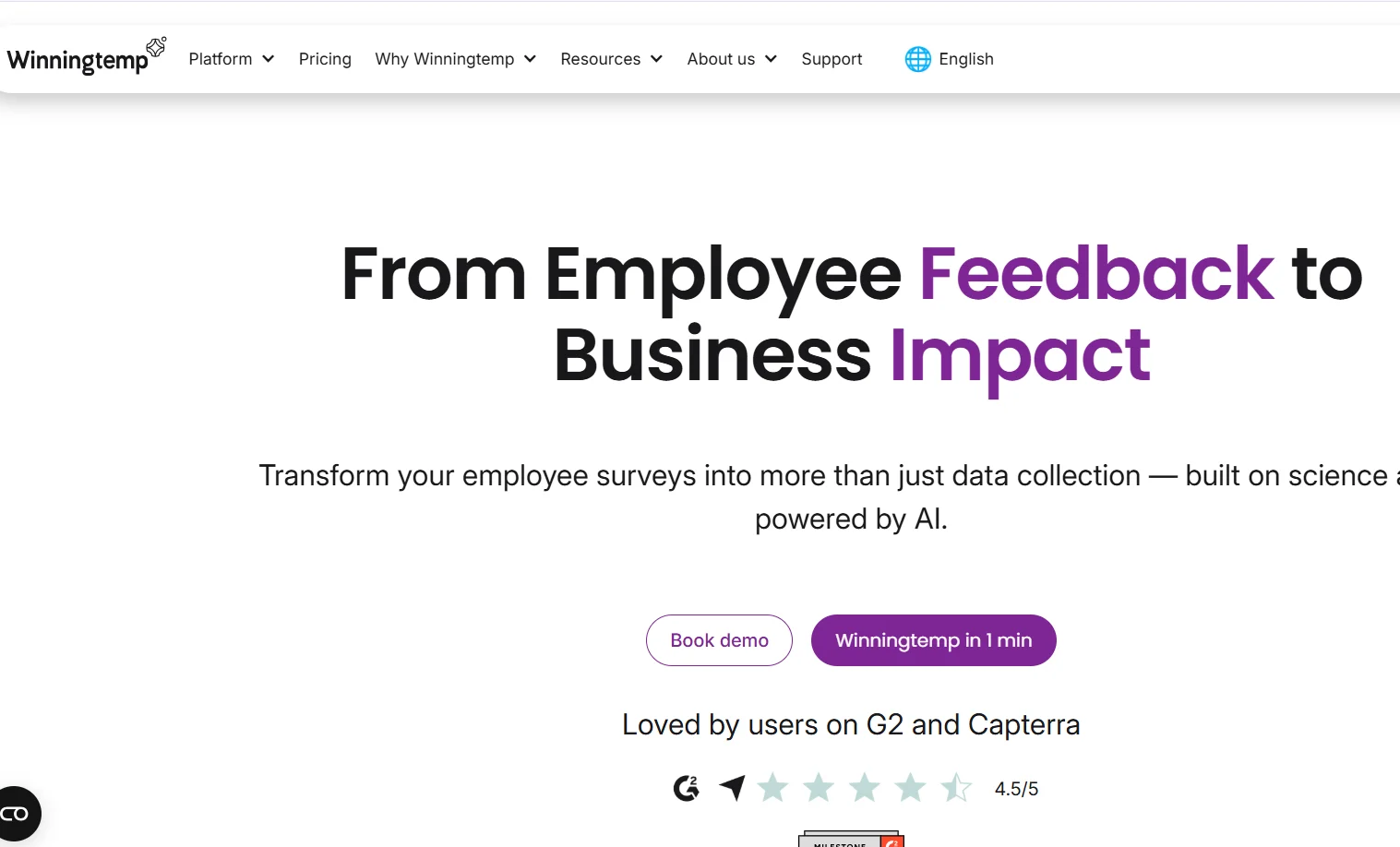 Winningtemp is the Nordic option and the most science-led on engagement measurement. Continuous, short pulse questions with AI surfacing where teams are struggling before it shows up in turnover.
It is narrower than the others. It measures and predicts, and I would not expect it to run your review cycle. Worth a look if engagement was the intuo module you actually used.
Also worth a look. Betterworks and Engagedly if OKRs are the priority, Peoplebox if you want goals connected to your existing tools, Trakstar for straightforward review cycles, Factorial as a lighter European HR suite, and TruQu, which was listed among intuo's own competitors.
One Thing to Check Before You Replace the Conversations
Intuo's guided one-to-one conversations were, for a lot of teams, the feature that got used every week.
Before you buy a whole platform to get them back, work out whether the gap is actually process or tooling. Plenty of teams run good one-to-ones with a shared agenda document and a recurring calendar invite, and a growing number use an assistant to capture notes and actions automatically. Our AI meeting assistants listings cover that category if that is the piece you are missing.
If what you need is the review cycle, the objectives and the engagement data as well, then yes, buy the platform. But I would not spend $5,000 a year to fix a meeting habit.
Data Export and Migration: Getting Out of Unit4 HCM
This is the section for existing customers, and the one I would act on first rather than leaving until your contract is nearly up.
A talent platform holds unusually sensitive material. Feedback given and received, notes from one-to-one conversations, objectives and their history, engagement survey responses, development plans, and in some cases performance ratings tied to named individuals.
Data migration here is not a formality. Some of that is legally yours to take. Under GDPR, employee data is personal data, and your organisation is the controller. Ask specifically what format an export arrives in and whether it includes historical records or only current ones.
Four things worth asking your account manager in writing.
What the data export covers, and how it arrives. CSV, an API, or a one-off file produced by support. The answer changes how long migration takes.
Does it include history. Past review cycles and old feedback are usually the valuable part, and are usually the part that does not come across.
What happens after termination. How long is your data retained, and can you still request an export once the contract has ended.
What notice is required. Talent contracts often auto-renew annually. Missing the window costs you a full year.
I would expect anonymous engagement survey responses to be the hardest thing to move. They are anonymised by design, so historical benchmarks frequently stay behind. If those matter to you, export the aggregate reports as PDFs before you leave, even if you cannot take the raw data.
How I Would Choose
Start by naming which single module you actually used most. Judging by the reviews I read, it is rarely all of them.
Mostly engagement surveys. Culture Amp if you are over 200 people, Winningtemp if you want prediction, Officevibe if you want simple.
Mostly performance reviews. Small Improvements for simplicity, Lattice for structure, PerformYard if your process is unusual.
Mostly one-to-ones and continuous feedback. 15Five, which is the closest in spirit to intuo's guided conversations.
Mostly OKRs. Leapsome, Betterworks or Peoplebox.
All of it, plus core HR. Personio or HiBob if you are in Europe, Leapsome if you want the soft layer broad and the HRIS light.
Then get the annual minimum in writing before the demo, not after.
Common Questions
What happened to intuo.io, and what is intuo Unit4?
Intuo Unit4, or Unit4 intuo, was the interim name after Unit4 acquired the company in 2019. The company stated that from January 2021 the intuo name no longer exists and the product became Unit4 Talent Management, part of Unit4 HCM.
Is intuo still available, and what is Unit4 Talent Management?
Not as intuo. Unit4 Talent Management is what the product became, and it now sits inside Unit4's wider HCM suite. The intuo.io domain points visitors to Unit4.
Who acquired intuo?
Unit4, the Dutch ERP and business software company, in 2019.
What are the best intuo alternatives?
Leapsome for breadth, 15Five for continuous feedback and transparent pricing, Lattice for structured performance management, Culture Amp for engagement surveys, and Small Improvements for simplicity.
What are the best Unit4 Talent Management alternatives?
The same list applies. Leapsome is the closest like-for-like if you want one platform covering feedback, goals, learning and surveys.
Is Lattice better than intuo?
Lattice is a more structured and more actively developed product, which is unsurprising given intuo stopped existing as a standalone brand years ago. It is also likely to cost more once the annual minimum is included.
Is Leapsome a good intuo alternative?
It is the closest match in scope. Both aim to cover the whole soft layer of HR rather than one slice of it.
How much does intuo or Unit4 Talent Management cost?
Unit4 does not publish pricing for its HCM modules. It is quote-based and depends on headcount and which modules you take.
Can I export my data from Unit4 Talent Management?
You should be able to request an export, and under GDPR your organisation controls that employee data. Confirm the format, whether history is included, and your retention period after termination.
What is the best European alternative to intuo?
Personio or Factorial if you need core HR as well, Winningtemp for engagement, Leapsome for the full soft layer. All are built with European data residency and GDPR in mind.
If You Are Still on Unit4 HCM
One last practical point for existing customers, because timing decides how much choice you have.
I would find your renewal date today and work backwards. Most contracts in this category auto-renew and require notice, often 60 or 90 days. If you discover that in month eleven, your decision has been made for you.
And I would run the export before giving notice rather than after. Support tickets get slower once a vendor knows you are leaving, and the records you most want, old feedback and completed review cycles, are exactly the ones that take longest to produce.
Prices and contract minimums in this article are drawn from vendor pricing pages and recent published comparisons, checked in September 2026. Most vendors in this category quote privately, so treat every figure as a starting point for the conversation rather than a quote.