

The best BrandVerity alternative depends on the problem you want to fix. For affiliate brand bidding, I would look at BluePear or The Search Monitor first. For a big paid search team, I would look at Adthena. For fake sellers, Red Points. For phishing and fake domains, BrandShield or Netcraft.
Picture this. You run an affiliate program. One week your brand clicks cost more, and one partner's sales jump for no clear reason. Someone is bidding on your name and sending the click through a hidden link. You need a tool that catches it and gives you proof. BrandVerity does that job. But it does not publish its price, and it is not the only choice.
I have not run these tools myself. Everything below comes from vendor pages, review sites and the press, and I say so when a claim is only the vendor's word.
Tool | Best for | Price I could find |
|---|---|---|
BluePear | Affiliate brand bidding on a smaller budget | Lite $169 a month, Business $499 a month (vendor site) |
The Search Monitor | Affiliate compliance and paid search monitoring | From $500 a month plus crawl fees (vendor pricing page) |
Adthena | Enterprise paid search intelligence and ad hijacking | Custom quote |
ImpersonAlly | Affiliate abuse and ad hijacking in paid search | Custom quote, free trial listed on G2 |
TrafficGuard | Invalid traffic and affiliate fraud | Not published |
Red Points | Counterfeits and fake sellers on marketplaces | Custom quote |
BrandShield | Phishing, fake domains and impersonation | Custom quote |
Corsearch | Trademark and wider brand protection | Not published |
Netcraft | Phishing and domain takedowns | Not published |
BrandVerity itself does not list a price. One third-party site puts it near $1,500 a month, but I could not confirm that, so treat it as a rough guess.
Here is everything I found, in plain words.
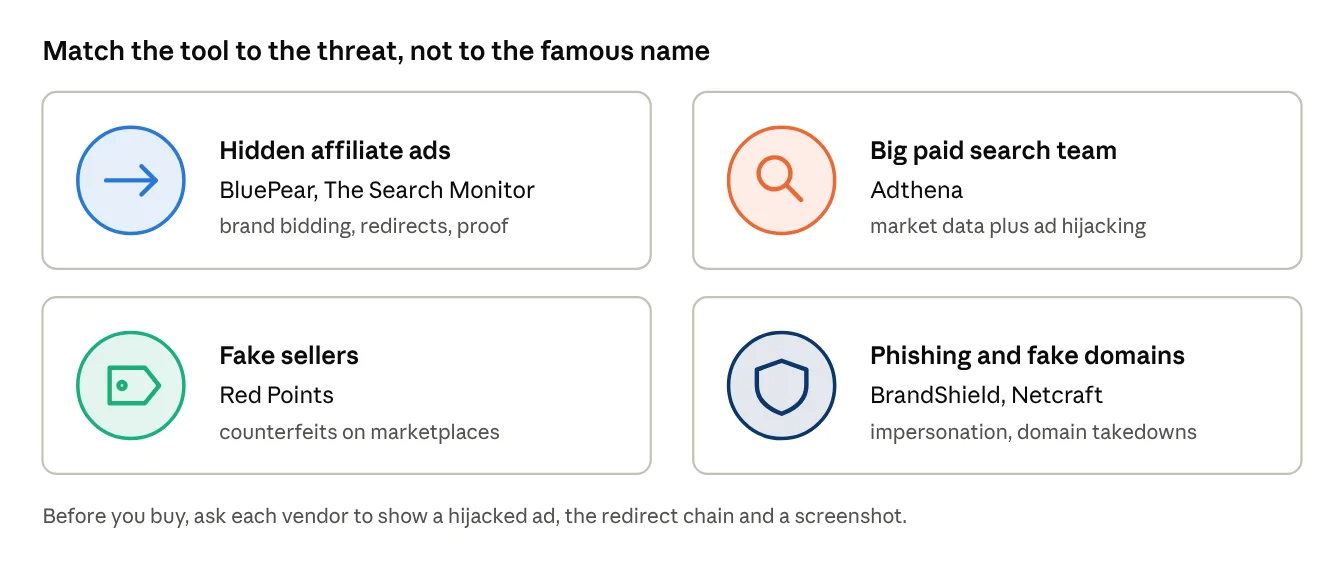 Read it by your problem first. The tool name comes second.
What is BrandVerity, and why do people look for alternatives?
BrandVerity is a brand protection tool for affiliate managers and paid search teams. It started with two products: Paid Search Monitoring and Web Compliance. In 2020, Partnerize bought BrandVerity, and the terms were not shared.
The main job is simple. It scans search results for your brand terms, finds ads that should not be there, and keeps proof. That proof helps you send a takedown request or end a partner contract. This is the heart of brand bidding control: stopping other people from paying to show ads on your own name.
BrandVerity has a good name. G2 shows it at 4.4 out of 5. So why do people shop around? I found four reasons.
No public price. G2 says the vendor does not list pricing, so you have to ask for a quote.
Sales led buying. BluePear says BrandVerity needs a demo first. That is BluePear's claim, so check it yourself.
Hidden redirects. BluePear also says BrandVerity does not catch complex redirects or dynamic cloaking. Again, a competitor's claim, so ask BrandVerity for a live test.
Wrong fit. Some teams need counterfeit takedowns or phishing defense, which is a different job from paid search compliance.
If your main worry is the price, jump to the cheaper alternatives. If it is hidden affiliate ads, start with the affiliate section.
How I would choose a BrandVerity alternative
Think of it like buying a smoke alarm. A smoke alarm and a burglar alarm both protect the house, but they do different jobs. Most lists mix these tools together as if they were the same. They are not. I use the same method when I compare any software, as in my guide to intuo.io alternatives: know what the product really did, then replace that.
I would check six things before I paid for anything:
The threat. Is it an affiliate bidding on your name, a rival ad, a fake seller or a phishing site? Pick the tool built for that threat.
Detection depth. Can it follow a redirect chain, capture an affiliate ID and spot cloaking? Ask for a live demo on your own brand terms.
Geo targeted ad scanning. Hijackers hide in the cities and devices you do not check. Ask which countries, languages and devices are scanned.
Evidence. You need automated SERP screenshots and clean audit trails. Without them, a partner will simply deny it.
Action. Look for a takedown workflow and cease and desist automation, so a finding turns into a fix without extra work.
Cost and contract. Ask for the full price, crawl or keyword fees, and the contract length. Then ask for a trial.
A tool that scores well on all six for your threat is the right one, even if it is not the famous one.
Best affiliate brand bidding detection software
These are the closest matches to BrandVerity. They watch search results for unauthorised brand bidding, trace the click, and give you proof. If you are an affiliate manager, this is the group to read first.
BluePear
 Best for: affiliate managers who want a lower price and a quick start.
BluePear looks for affiliate ad hijacking, cloaked redirects and abused coupons. It says it scans search results around the clock across locations and devices, and it saves SERP screenshots and redirect chains as evidence. Alerts can go to Slack, Telegram or email. Complaints are sent from inside the tool.
The price is public: Lite at $169 a month and Business at $499 a month, plus a custom Enterprise plan. There is a 7 day trial.
What to watch: most of what I read comes from BluePear itself, including its claim of finding up to five times more hidden partners than manual checks. Run the trial on your own brand terms before you believe it.
The Search Monitor
 Best for: teams that want affiliate compliance and paid search monitoring under one roof.
The Search Monitor started in 2007 and Similarweb bought it in 2025. Its pricing page lists Affiliate Compliance from $500 a month, Brand Protection and SEM Insights from $800, and Ad Armor from $1,200, all plus keyword crawling fees. It says it covers 10 search engines and 244 countries, with unlimited logins.
What to watch: the crawl fees change the real bill, and third party sites list different prices. Ask for the full price with crawl fees before you sign.
ImpersonAlly
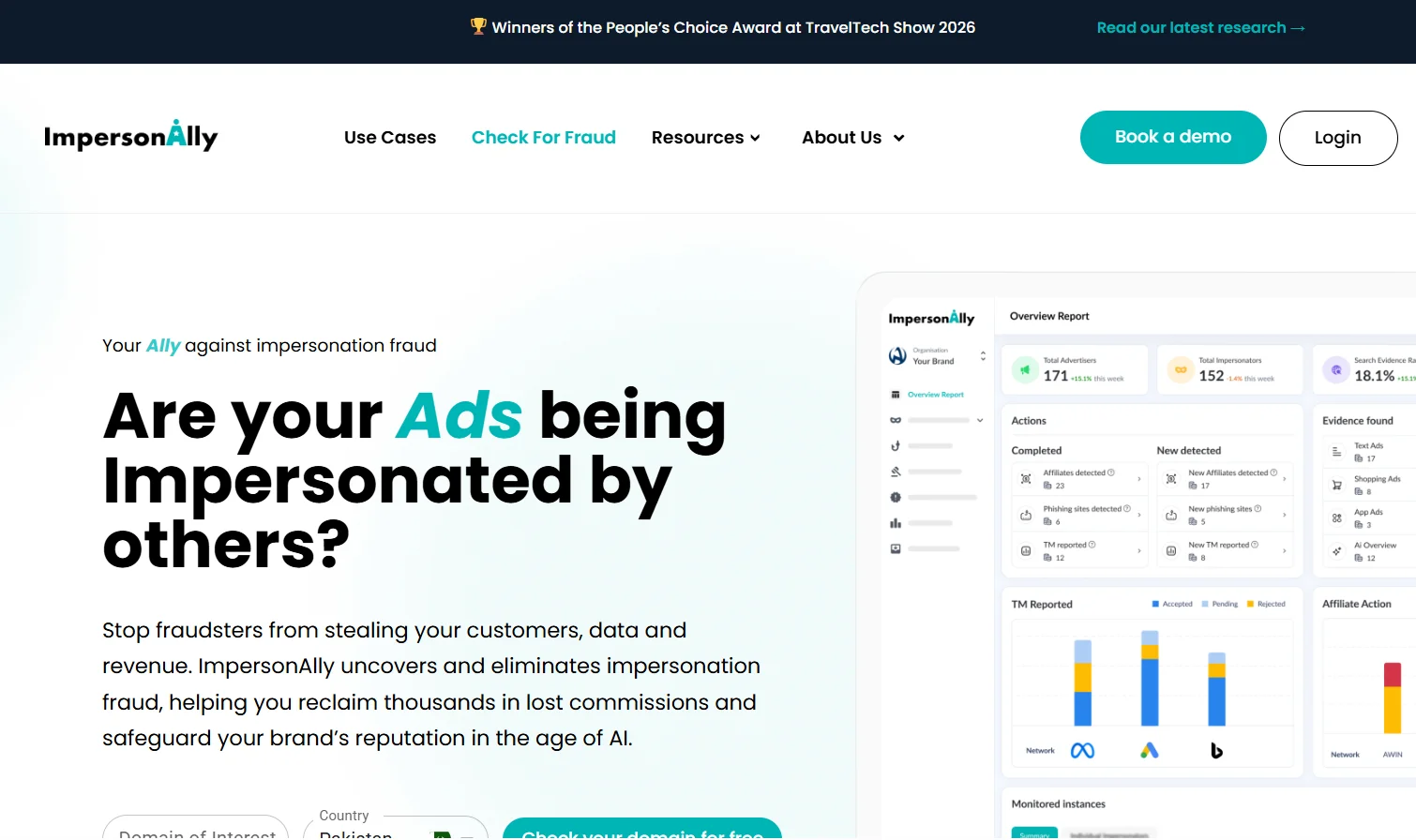 Best for: large teams, mostly in travel and finance, that fight affiliate impersonation in paid search.
ImpersonAlly detects unauthorised brand bidding, tracks affiliates who copy a trusted partner, and supports trademark reports and automated takedowns. G2 shows 4.8 out of 5, but from only 2 reviews, so I would not lean on that score. Pricing is a custom quote, and G2 lists a free trial.
Adthena
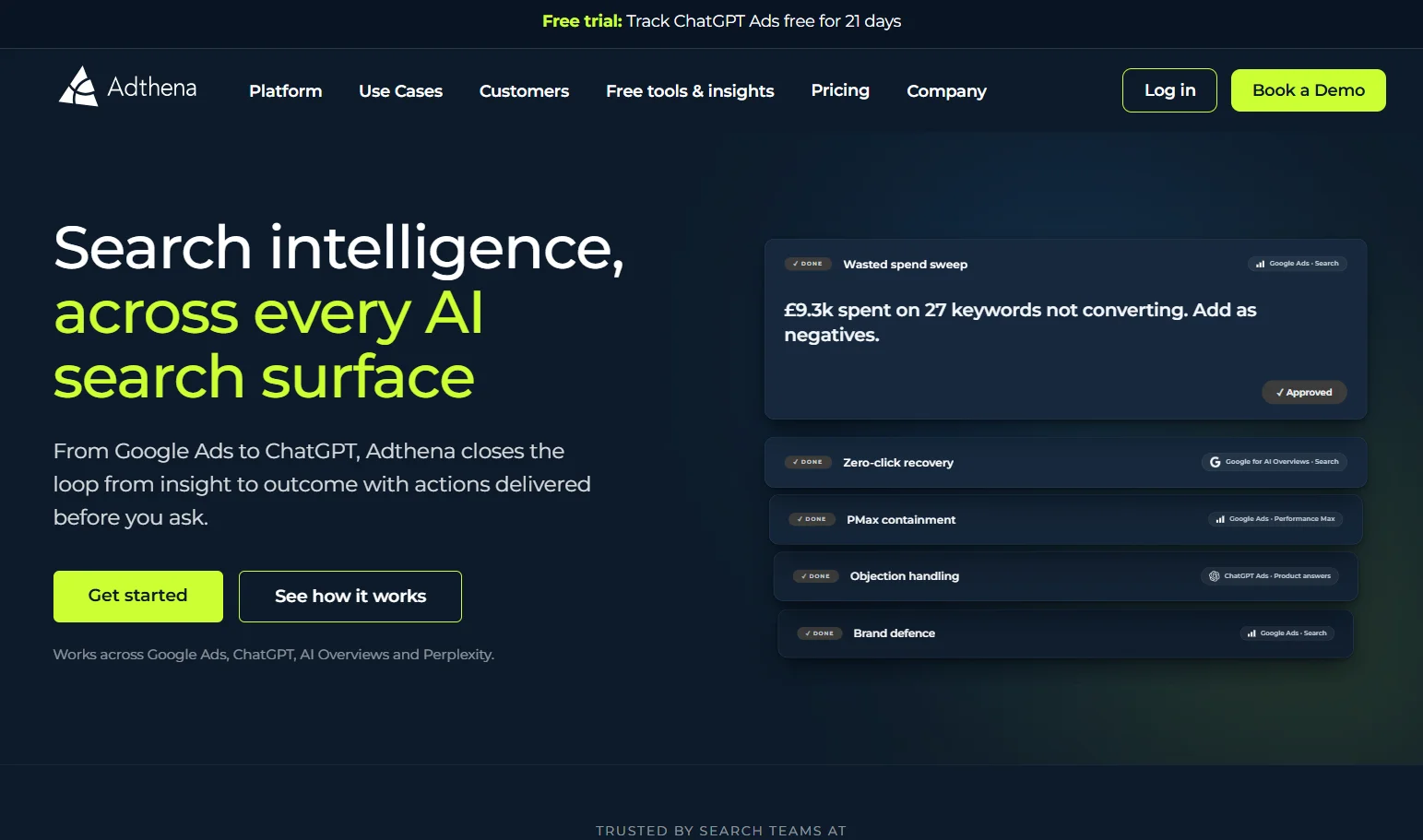 Best for: enterprise paid search teams that want market data and brand protection together.
Adthena offers ad hijacking detection, powered by ImpersonAlly according to Adthena's own page. It crawls results around the clock, traces redirects and masked affiliate links, and reports affiliate IDs, full SERP screenshots and redirect paths. It also has a tool for brand bidding. G2 shows 4.4 out of 5 from 44 reviews. Pricing is a custom quote.
What to watch: it is a wider platform than most affiliate teams need, so you may pay for features you never open.
TrafficGuard
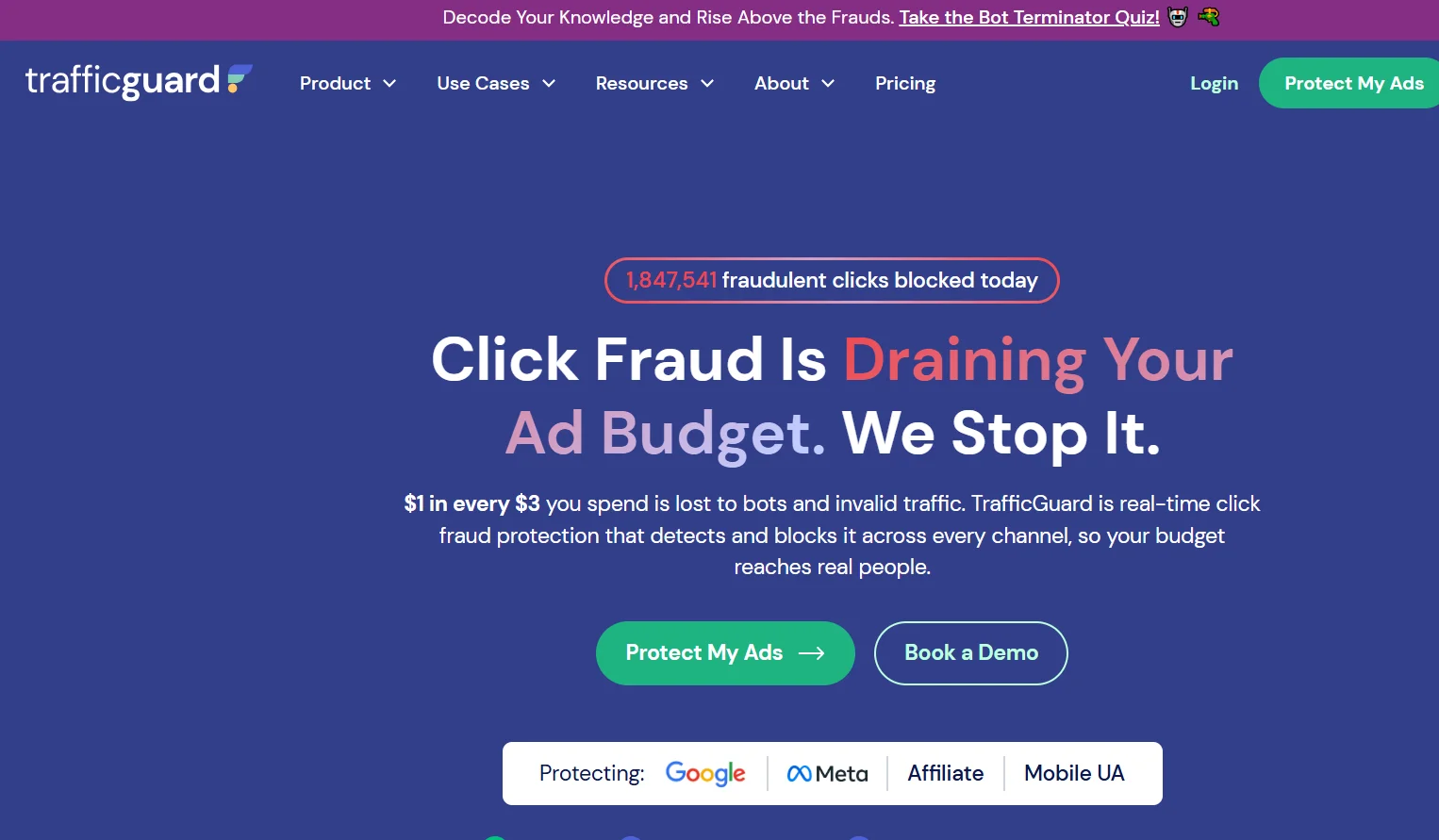 Best for: teams where the real problem is invalid traffic and click fraud.
TrafficGuard is mainly a fraud prevention tool. Its page lists brand bidding, brand safety and location fraud under compliance fraud, and it also covers affiliate click fraud. I could not find a price. If you are unsure how fraud tools differ from brand protection, I explain it in brand protection vs click fraud.
What to watch: I would not pick it as a like for like swap for BrandVerity. It is built for fraud first and search results monitoring second.
Enterprise brand protection alternatives
These tools do not watch your search ads the way BrandVerity does. They guard the brand in wider places: marketplaces, fake websites, social accounts and trademark records. Pick them if your problem is bigger than paid search.
Red Points
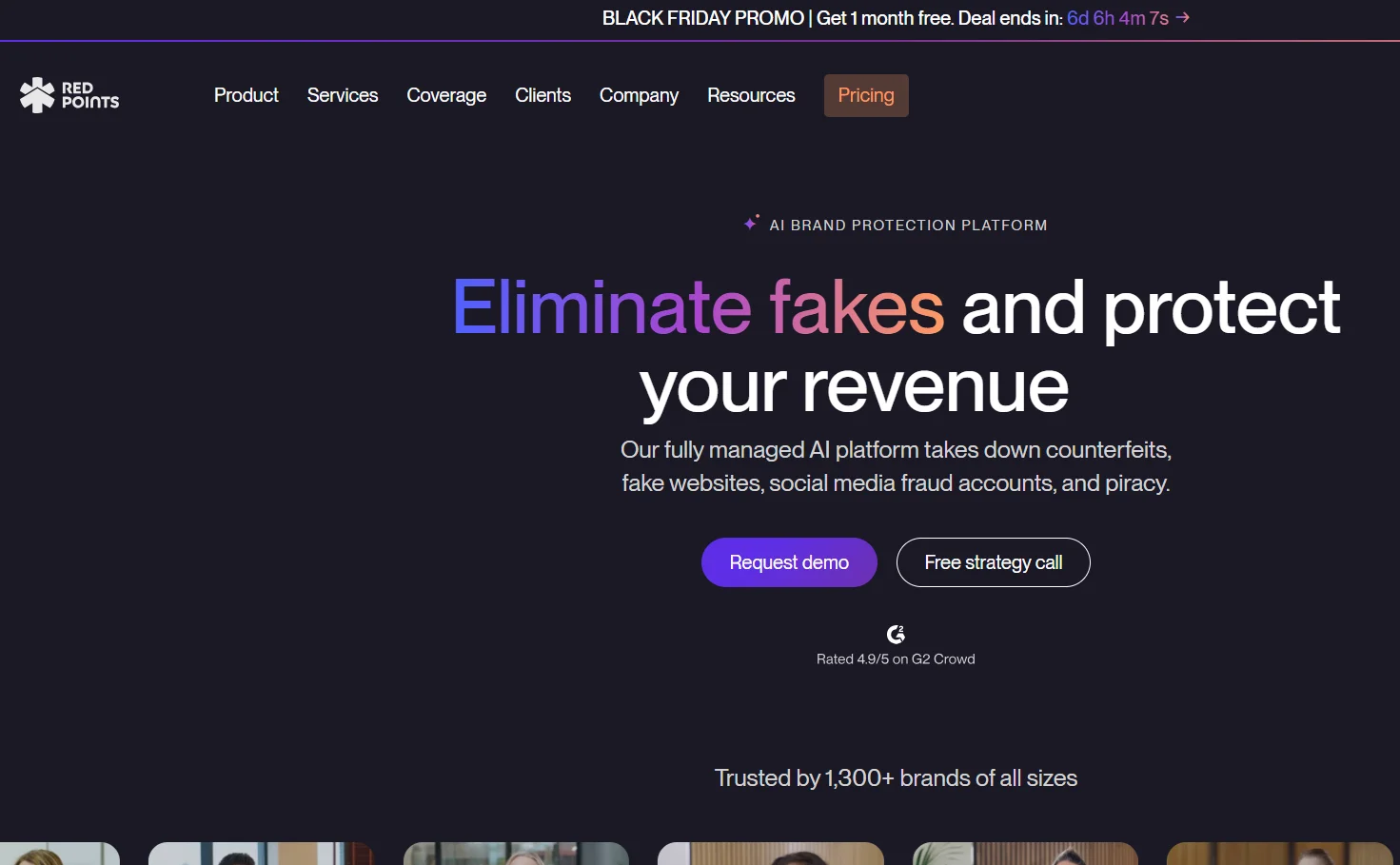 Best for: e-commerce brands with fake products and unauthorised sellers on marketplaces.
Red Points is built around counterfeit detection and IP enforcement at high volume. According to BrandShield's own comparison, takedowns are mostly self serve and the price is a flat yearly subscription. BrandShield also says Red Points has limited phishing and domain coverage. That is a rival's view, so check it in a demo.
BrandShield
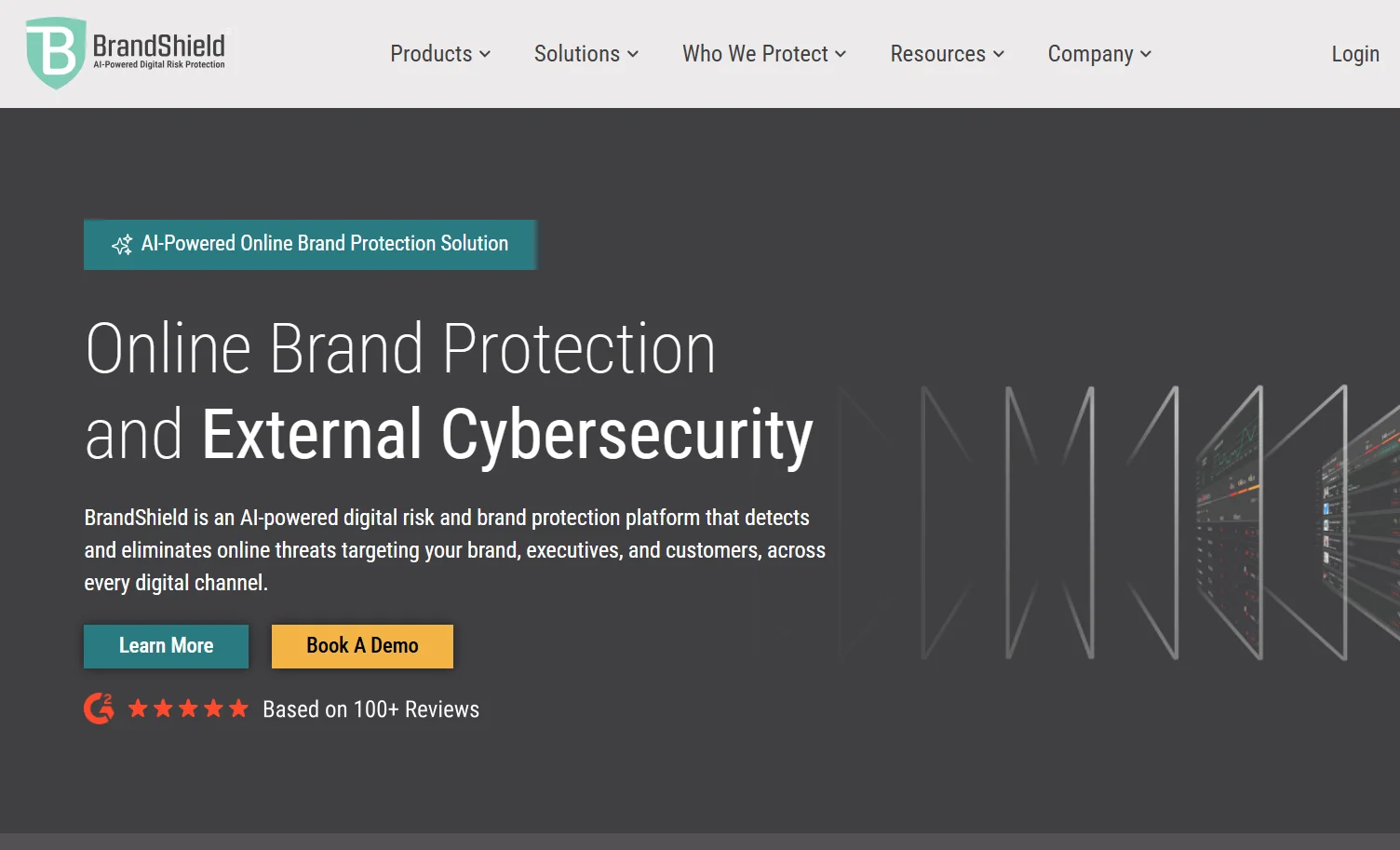 Best for: brands facing phishing, fake domains and impersonation across many channels.
BrandShield is a digital risk protection (DRP) platform. Its page lists phishing sites, executive and brand impersonation, social media scams, fake ads, counterfeits, rogue mobile apps and dark web exposure. It says AI finds the threats and a person checks them before enforcement. Pricing scales with coverage, so you will need a quote.
Corsearch
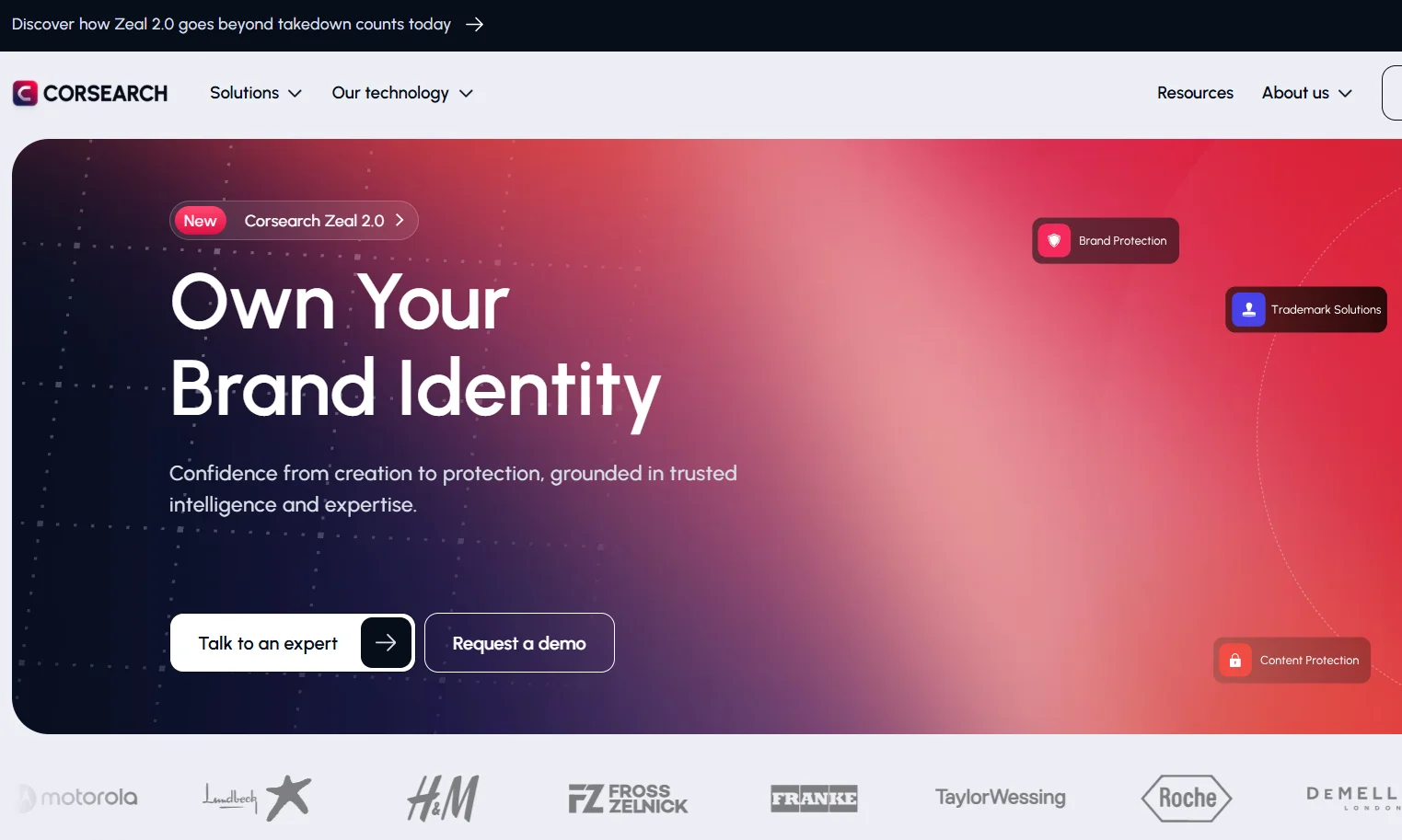 Best for: legal and brand teams that manage trademarks and want protection online as well.
Corsearch pairs trademark management with digital brand protection. Third party lists show custom pricing and no public rates. If your lawyers drive the process, this is the more natural home.
Netcraft
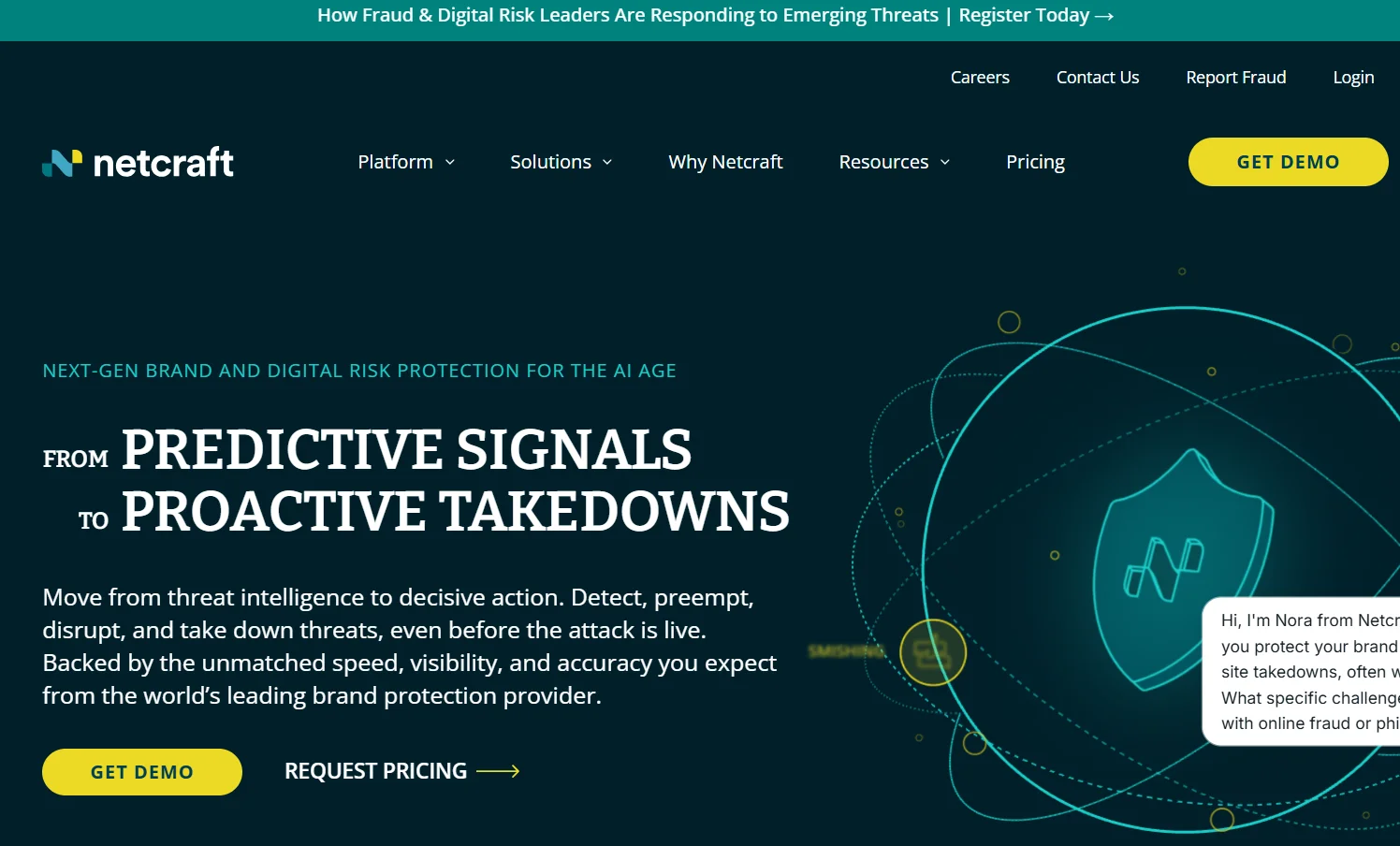 Best for: security teams that need phishing and domain takedowns.
Netcraft watches for look alike domains, including ones that are not live yet, and checks them daily. When a domain is confirmed as harmful, its team submits a takedown. It claims to take down 33 percent of global phishing attacks. That figure is Netcraft's own, so I would ask for proof before relying on it.
What to watch for all four: none of them is a swap for paid search monitoring. If your pain is a partner bidding on your name, they will not find it the way BrandVerity does. Typosquatting and domain squatting are their territory instead.
PPC spy tools and free options (lower cost, lower fit)
These tools show what your rivals do in paid search. They are not brand protection tools. They will not catch a hidden affiliate redirect or send a takedown. G2 lists several of them as BrandVerity alternatives, and I think that is a stretch.
Semrush and Ahrefs: keyword research and ad intelligence. Good for seeing who bids near your terms. G2 users mention price and a learning curve for Semrush.
SpyFu: tracks competitor PPC keywords and ads. One price tracker (as of June 2026) lists $39, $59 for a first month, and $249 plans. Confirm on SpyFu before you buy, as this is a third party number.
Similarweb: digital traffic and market data. It also owns The Search Monitor now.
What if you have no budget? You can still do basic PPC compliance monitoring by hand:
Search your brand name, with typos and with ".com", and note every ad.
Use the Auction Insights report in Google Ads to see which advertisers show up next to you.
Check from other cities, devices and times of day.
File a trademark complaint with the search engine when an ad breaks its rules.
This works for a small brand. It does not scale, and it misses ads that only appear in certain places.
BrandVerity vs the alternatives, one by one
Here is the quick version of each match up. I give a pick for each, but the right pick still depends on your threat.
BrandVerity vs Adthena
Both watch paid search. Adthena is a wider market intelligence platform with ad hijacking detection added. BrandVerity is narrower and focused on compliance. Pick Adthena if your search team also wants auction data. Pick BrandVerity if compliance is the only goal.
BrandVerity vs BluePear
Both find brand bidding and keep evidence. BluePear publishes prices and offers a 7 day trial. BrandVerity sells through a demo. Pick BluePear if you want to test cheaply first. Pick BrandVerity if you want a longer track record.
BrandVerity vs Red Points
These solve different problems. Red Points fights counterfeits and fake sellers on marketplaces. BrandVerity watches search ads and partners. Pick Red Points if you sell physical goods that get copied.
BrandVerity vs BrandShield
BrandShield covers phishing, fake domains, impersonation and rogue apps. BrandVerity covers paid search and web compliance. They can sit side by side in one security plan.
BrandVerity vs ImpersonAlly
Both go after unauthorised brand bidding and affiliate abuse in paid search. ImpersonAlly has few public reviews, so ask for a trial and for customer references. Adthena also sells ImpersonAlly's detection.
BrandVerity vs TrafficGuard
TrafficGuard is a fraud tool first. It fits when bad clicks and fake affiliate traffic drain your budget. BrandVerity fits when the problem is who shows ads on your name.
Cheaper alternatives, affiliate manager picks and how to spot ad hijacking
Cheaper alternatives to BrandVerity
The lowest published prices I found are BluePear at $169 a month and The Search Monitor at $500 a month for affiliate compliance (plus crawl fees). Both are vendor numbers, and both can change. SpyFu is cheaper still, but it will not give you proof or takedowns. Cheap only helps if the tool does the job.
BrandVerity alternatives for affiliate managers
If I managed an affiliate program, I would test BluePear and The Search Monitor side by side on my own brand terms for a week. Then I would add Adthena to the list only if my search team also needed market data.
Automated trademark infringement detection in Google Ads
The tools that do this scan results on a schedule, across locations and devices, and save a screenshot of each bad ad. Look for the ad text, the display URL and the full redirect path in every report. That is what a search engine or a partner will ask to see.
How to detect affiliate ad hijacking by hand
You can do a first check yourself before you pay for anything:
Search your brand alone, then with words like "review", "sale" and "coupon".
Note any ad that is not yours. Does your brand name appear in the ad text?
Click through and write down every URL in the chain, from the display URL to the final page.
Match affiliate sales to click IDs to find sales that began with a branded search.
Repeat from other cities, on mobile and desktop, and at night or on weekends. Hijackers often hide at those times.
If the same partner shows up on many brand searches and your name sits in the redirect, that is rarely an accident. A tool does this at scale, around the clock, with the proof saved.
BrandVerity alternatives FAQ
What is the best alternative to BrandVerity? For affiliate brand bidding, BluePear or The Search Monitor. For enterprise paid search, Adthena. For fake sellers, Red Points. For phishing, BrandShield or Netcraft.
Who are BrandVerity's main competitors? The closest are The Search Monitor, BluePear, ImpersonAlly and Adthena. Red Points, BrandShield, Corsearch and Netcraft compete only in the wider brand protection space.
Are there tools similar to BrandVerity that publish prices? Yes. BluePear lists Lite at $169 a month and Business at $499 a month. The Search Monitor lists modules from $500 a month plus crawl fees. Check both sites, since prices change.
How much does BrandVerity cost? The vendor does not publish it, and G2 says the same. One third party site guesses about $1,500 a month, which I could not confirm. Ask for a quote.
What are the top paid search monitoring tools? BrandVerity, The Search Monitor, BluePear, ImpersonAlly and Adthena all watch paid search for brand misuse.
Is there a free PPC compliance monitoring tool? Not a full one that I found. You can check by hand, use Google Ads Auction Insights, and file complaints. Some paid tools offer a free trial, such as BluePear for 7 days.
Can I use Semrush or SpyFu instead of BrandVerity? Not for compliance. They show rival ads and keywords. They do not catch hidden redirects, keep proof or send takedowns.
What is ad hijacking? It is when someone uses your brand name or look to place ads that take your clicks, often through an affiliate link. It can raise your costs and cut your sales.
What is the difference between brand bidding and ad hijacking? Brand bidding is paying to show ads on your brand terms. Ad hijacking goes further and copies or hides behind your name to steal the click.
My verdict on BrandVerity alternatives
There is no single best alternative. There is a best one for your problem.
If partners bid on your name, test BluePear and The Search Monitor first. If you run a big search team, ask Adthena for a demo. If fake sellers or phishing sites hurt you more than ads do, look at Red Points, BrandShield or Netcraft. If you only need a quick look, start with the free hand checks above.
My one tip is to run every trial on your own brand terms. Ask each vendor to show you a hijacked ad, the redirect chain and the screenshot. The one that shows you real proof wins.
That is it. That is my BrandVerity alternatives review.